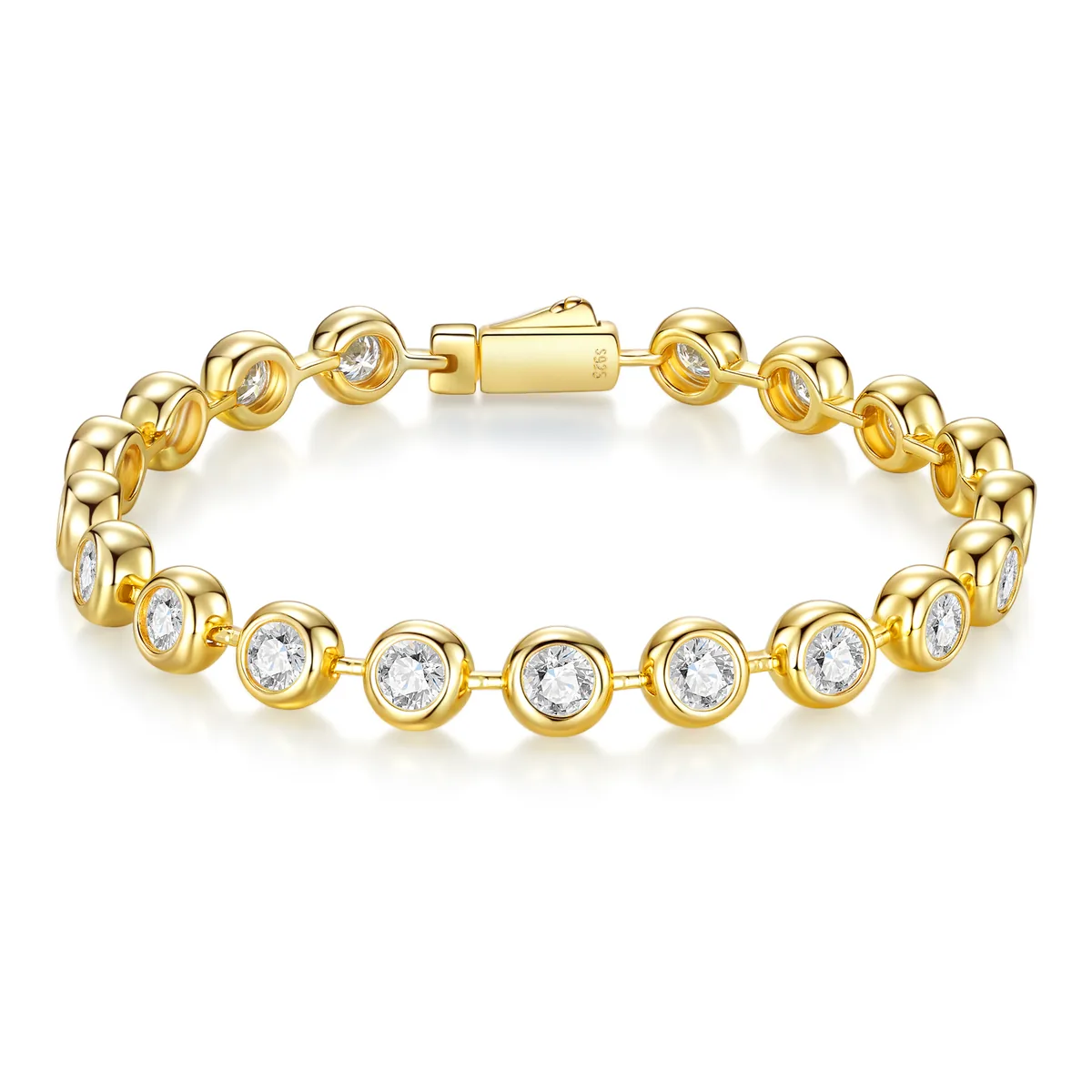









For a 2,000-piece S925 moissanite order, plan on roughly four to six weeks between sample approval and shipment in a normal production season, and seven to nine weeks if that window collides with Chinese New Year. Amara Jeweiry’s published lead time for a first bulk production run is 15–25 days once the deposit lands, with reorders at 10–15 days. The extra weeks come from three places buyers routinely forget: sourcing moissanite stones that are not in stock, final QC and packing of a full carton lot, and freight booking. The stage-by-stage schedule below shows where those days actually go, and the closing checklist gives you the questions to put to any factory before you approve a window.
How many weeks from sample approval to shipment, realistically?
Start with the numbers the manufacturer itself publishes. Amara Jeweiry states 7–10 days for samples, 15–25 days for first bulk orders, and 10–15 days for reorders, with OEM/ODM projects starting at 50–100 pieces and stock designs at an MOQ of 30. A 2,000-piece run of one design is first-bulk-scale for most buyers, so the honest baseline is 15–25 days — call it three to five weeks of production, not two.
Then add the calendar overhead. Stone procurement for 2,000 pieces of melee moissanite can take several working days if the exact sizes are not on the shelf. A 30% deposit by T/T must arrive and be reconciled before the slot opens, usually one to three days. Carton packing of two thousand set, polished pieces, plus booking sea or air freight, overlaps the final QC week but can push the ship date out a few days more. Stack these realistically and the honest planning number is four to six weeks in a normal season. The 8–16 week timelines in general sourcing guides describe apparel, gifts, and hardware; S925 silver moves faster, but its schedule has its own failure points, which the rest of this article maps.
What does the factory actually do in those weeks?
The table below shows a typical S925 moissanite production schedule for a bulk run after sample approval. The ranges are industry-typical for a Shenzhen silver jewelry workshop; the exact day counts for your design are what you should ask the factory to confirm in writing.
| Stage | Typical duration | What can stretch it |
|---|---|---|
| Stone procurement and grading | 0–7 days | Non-stock sizes, shapes, or carat weights that carry supplier MOQs |
| Mold prep and wax printing from the approved file | 1–3 days | Design tweaks raised after “approval” |
| Silver casting, cutting from the tree | 2–4 days | Furnace slotting, failed trees, weight tolerance rework |
| Filing, assembly, linking, pre-polish | 3–5 days | Chain pieces vs. solid pieces have different bench flows |
| Moissanite setting | 5–10 days | Pavé count per piece; 40x-magnification micro-pavé is slow by design |
| Final polish | 2–3 days | Prong damage found and re-set during polishing |
| Plating (rhodium or gold vermeil) | 2–4 days | Subcontracted plating line bookings, thickness specs |
| QC, assay pull, claw check, packing | 3–5 days | Failed AQL lots pulled back for rework |
Summed naively the stages look like 18–41 days; in practice several run in parallel across a line, which is how the published 15–25 day figure is achievable. What matters is the critical path, and on a moissanite-heavy design the setting bench is almost always the pole in the tent.
Wax and casting: where the first week goes
Once the deposit clears, the approved design moves from the sample room into bulk. The approved wax file or master model produces production wax; the waxes are treed, invested, burned out, and cast in 925 silver, then cut from the tree and weighed. Casting is fast per run, but 2,000 pieces mean many cycles of the same mold, and each cycle is a chance for porosity or short fills. This is also where the ±3% weight tolerance published on Amara’s site gets checked — pieces outside tolerance are remelted, and that rework eats days quietly. Reorder buyers benefit here: mold retention and standing casting lots are precisely why a 300-piece mid-season reorder compresses to 10–15 days.
Setting: the longest pole in the tent
Moissanite setting dominates the calendar on most designs. Amara publishes that its micro-pavé is set under 40x magnification with 100% claw checks and pull testing — the discipline that keeps stone-loss claims rare, and the reason setting throughput is measured in careful hours per bench, not machine cycles. Do the arithmetic before you approve the window: a 2,000-piece run of a ten-stone pavé band is roughly twenty thousand claw seats, each cut, seated, and checked. If the factory quotes a setting stage shorter than a week for that consumption, ask how many setters are assigned, in parallel.
Polishing and plating: the stage most disputes come from
After setting, pieces go through final polish and then plating. This short-looking stage generates a disproportionate share of disputes months later, because plating thickness and adhesion are invisible on shipment day. A disciplined schedule books pre-plating and post-plating inspection as two separate gates, so a defect found after plating can be traced to polishing or to the bath. If you change plating specification now — switching from rhodium to 18K gold vermeil over the same S925 body, for example — expect the stage to stretch, and get the revised date in writing before the pieces enter the bath.
QC and packing: the week that protects the other five
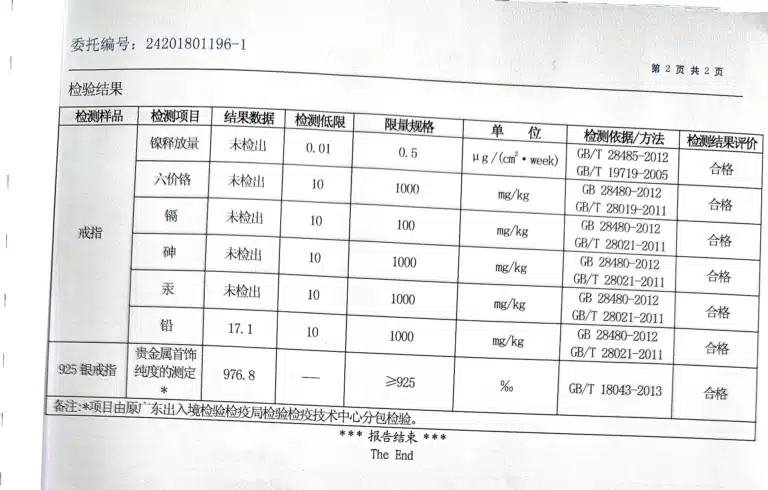
The final days are QC and packing: a final inspection at an agreed AQL level (Amara publishes AQL 2.5 and third-party assay reports against GB 28480-2012), claw checks and pull testing on sampled pieces, then packing with anti-tarnish measures for the sea container. Two thousand pieces pack into real carton volume, and desiccant quantities, inner boxes, and labeling take bench time. Do not treat this week as slack — it is the gate that stops a five-week investment turning into a container of claims, and a batch video before you release the 70% balance is the cheapest insurance available at this point.
Why doesn’t a 2,000-piece order just take the sample time multiplied?
Because production scheduling is about lots and lines, not multiplication. A factory schedules casting trees, setting batches, and plating baskets, and balances your order against other buyers’ slots. A 2,000-piece run may be split across casting lots, or deliberately into a stock portion produced first and a private-label portion behind it, each with its own dates. That is why one buyer’s “three weeks” and another’s “six weeks” can both be true: the difference is where your design sits in the slot queue, how much stone consumption is on hand, and how many stages are subcontracted. The conclusion: get this order’s critical path in writing, stage by stage — which the checklist below does.
How does Chinese New Year change the schedule?
Chinese New Year is the single biggest scheduling event in the Chinese jewelry manufacturing calendar, and it is fixed by the lunar calendar, not by factory convenience. The first day of Lunar New Year 2027 falls on Saturday, 6 February, as published on Hong Kong’s official 2027 general holidays page. Around that date, most workshops in Shenzhen’s Shuibei jewelry belt wind down one to two weeks earlier as migrant staff travel home, and output ramps back over one to two weeks after the official days because setters, casters, and polishers return on their own schedules. Material suppliers, plating subcontractors, and freight forwarders close on similar or longer timelines, so an order that is fine on paper can stall between stages if one upstream partner reopens late.
As of late October 2026, Chinese New Year 2027 is the relevant shutdown for any order whose approval-to-shipment window crosses February. If your sample approval falls in December 2026 or January 2027, work backward from the shutdown: either the casting-and-setting cycle completes before the last working day, or the run restarts after the factory’s confirmed return date. Get three dates in writing — last casting date, first post-holiday setting date, last freight booking date before carriers congest. A factory that volunteers these dates unprompted is telling you something useful about how it schedules.
What should you ask the factory to confirm? The production-window checklist
Before you approve a sample and wire the deposit, send the factory this list and require written answers. Ten minutes of typing buys the difference between a plan and a hope.
- Slot start date: the exact date your production slot opens, tied to deposit receipt, not to “approval” alone.
- Stage calendar: per-stage day counts for this exact design — wax, casting, setting, polish, plating, QC — with the calendar dates each stage starts and ends.
- Stone confirmation: are the exact moissanite sizes, colors, and carat weights for 2,000 pieces in stock today? If not, the supplier’s lead time and any MOQ, and who pays it.
- Setting capacity: how many setters, working how many days, for this design’s stone count — and whether micro-pavé is done in-house under magnification.
- Plating logistics: in-house bath or subcontractor, booking lead time, thickness specification, and the date pieces enter the bath.
- QC gates: the pre-plating and post-plating inspection points, the final AQL level, and the assay or pull-test documentation you will receive with the shipment.
- Holiday exposure: if the window crosses Chinese New Year (6 February 2027 for next season), the last production day before the break, the restart date, and the last freight booking date.
- Incoterms and freight: who books the vessel or flight, the carton lot size, and how many days packing adds after final inspection passes.
- Mid-production visibility: the batch video or photo checkpoint before the 70% balance is due, and what it will show (casting lots, set pieces, packed cartons).
- Slip protocol: what happens if a stage misses its date — a written recovery plan, and whether the order can be split into staged releases so part of the stock ships on time.
A factory that answers all ten in one reply is running a real scheduling system. One that answers three and deflects the rest has told you where six weeks become nine.
FAQ
Does sample approval mean bulk production starts the same day?
No. Sample approval is a design decision; bulk starts when the deposit is received and the slot is confirmed, and a production run is managed differently from a sample even for the identical design. The published sample lead time of 7–10 days and the first-bulk lead time of 15–25 days are separate figures for a reason — the pre-production sample and the production run answer different questions: the sample proves the design, while bulk scheduling proves the process at volume.
Do reorders of the same design move faster?
Yes. Amara publishes 10–15 days for reorders, and the structural reasons are mold retention and standing casting lots: the wax tooling already exists and the stone sizes are known, so the schedule loses its procurement and tooling stages.
Can I split 2,000 pieces into two or three shipments?
Most factories will, and it protects launch dates when a stage slips. Ask early: split releases change packing sequences and may affect storage and payment terms — the free storage window, holding fees, and PO terms for staged S925 shipments are worth settling before the deposit.
How do I stop the timeline from being wasted on quality claims later?
Pin the inspection plan to the schedule, not just the ship date. Two-gate inspection around plating, the AQL level for the final inspection, and a batch video before the balance payment all cost the factory little when they are scheduled in advance — and they cost you a season when they are not.
What is the fastest way to get a firm date for a 2,000-piece run?
Send the design number, stone specification, plating finish, quantity, and target ship date in one message with the checklist above attached, and ask for the stage calendar in return. Amara Jeweiry publishes a 12-hour quote turnaround through its contact page and WhatsApp — faster than iterating through a marketplace chat.