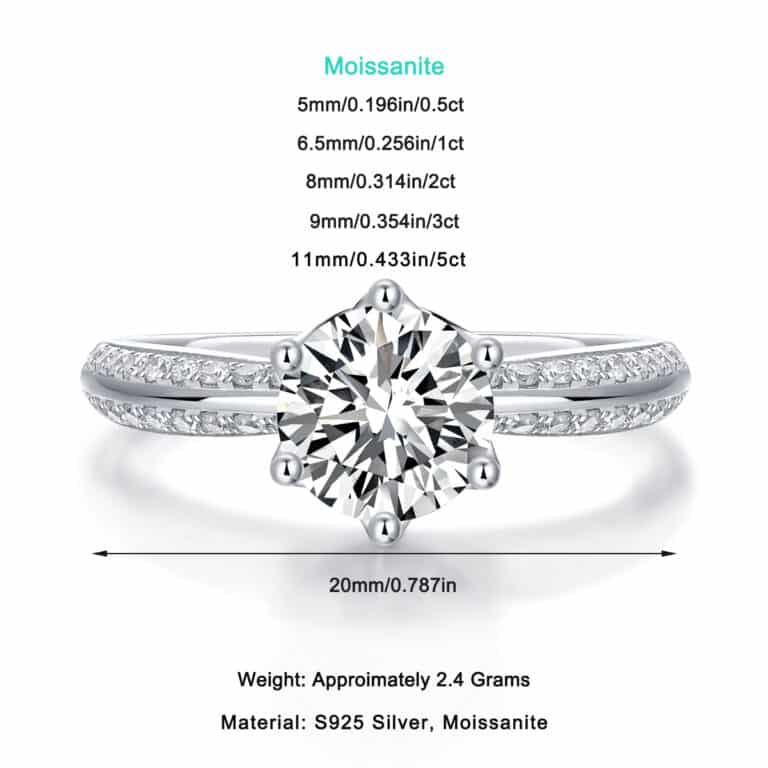








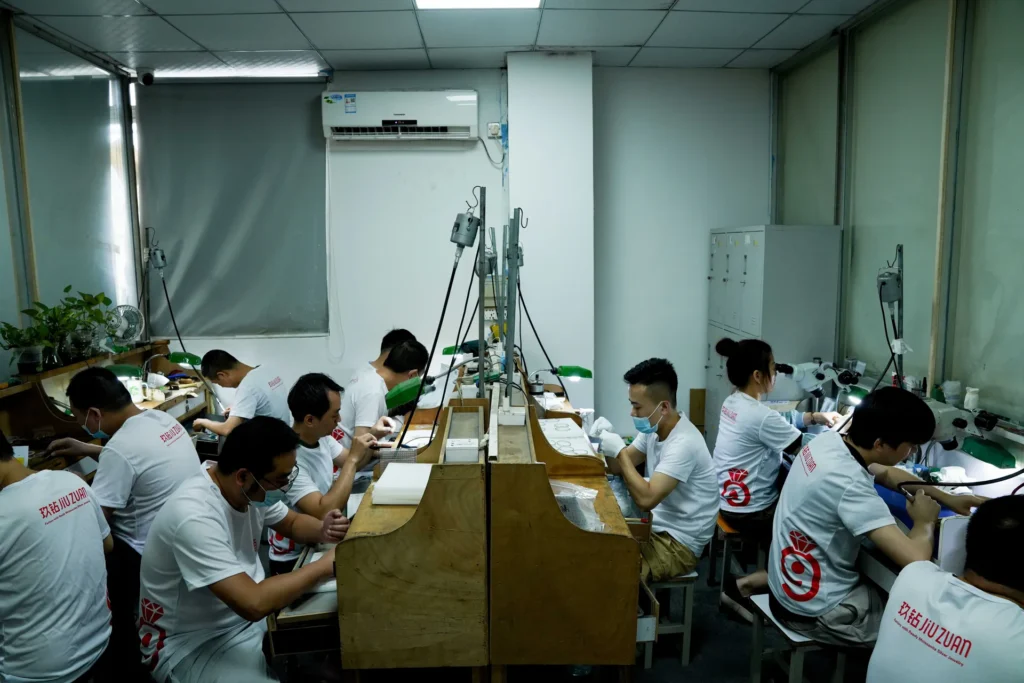
A 60/40 split is normal in S925 jewelry, but it is not one production schedule. It is two lots that may share a design file and a mold. The 60% wholesale side can run on the stock or stock-mold path; the 40% private-label side runs on the OEM path, with its own sample approval, marking, plating and inspection record. Four checks decide whether the split costs days or weeks: whether the 40% needs a new mold or fits an existing one; whether casting, filing, setting, polishing and plating can stay in one batch and one plating tank; how S925 marking and testing are batched for each destination; and whether 40% clears the per-design and per-stone-size minimum. Clear those, and the split is a sequencing exercise, not a production crisis.
Is a 60/40 split normal in S925 jewelry manufacturing?
Yes at the order level. Buyers commonly keep a stock assortment for immediate replenishment and put a private-label capsule behind it. What is not routine is treating the two halves as one production lot.
Most 60/40 guidance comes from food, cosmetics and apparel contract manufacturing, where the cost of a split is changeover time: a line stops, is cleaned, and is set up again. Silver casting does not work that way. The mold is a durable tool, the metal is billed by weight per style, and plating is a tank process whose cycle does not shrink because the lot is small.
Our own published terms already separate the two paths: MOQ 30 pieces on the order total for stock and mixed orders, 30–50 pieces per design when customizing stock molds, and 50–100 for full OEM/ODM. Ready-to-ship stock dispatches in 7–10 days; made-to-order production runs 15–25 days; reorders run 10–15 days.
Why does a 60/40 order become two production schedules?
The 60% is gated by availability and packing. The 40% is gated by approval. Stock designs already exist, so the wholesale half can be picked, barcoded, photographed and dispatched in 7–10 days. The private-label half starts with CAD, which our terms deliver in 48 hours, then a wax model, then a sample 7–10 days after sign-off, then 15–25 days of bulk production.
Work backwards from the private-label date, not the stock date. If you need one launch date, you are choosing between holding finished stock and shipping twice. Holding ties up stock and delays the 60% balance; shipping twice adds freight and documents.
Put two release dates and two lot IDs on the order. The expensive mistake is one requested ship date for both lines: the factory either holds the stock lot or rushes the private-label lot.
Whose wax model and steel mold are you actually booking?
A wax model and a steel mold are not the same asset. The wax is a printed form used to approve geometry; the steel mold is the master that produces the casting tree. Our process approves a 3D-printed wax model before metal is cut, and wax-stage revisions are free.
Three mold statuses change the schedule:
- Public stock mold. The design is already in production. No tooling project, no sample round; ready-to-ship lines dispatch in 7–10 days.
- Stock mold customized. You change logo, plating or stone grade within the existing seat. No new mold; 30–50 pieces per design.
- New buyer-exclusive mold. New geometry. Full OEM/ODM at 50–100 pieces, with a pre-production sample before bulk.
If the 60% is genuinely stock, it must map to a design with a public mold; without one, it is made-to-order however the PO labels it.
If the 40% needs a new mold, that mold is yours: exclusive, stored free for three years, never reused. The scheduling consequence: the 60% cannot be produced from your exclusive mold and sold as public stock. Either the 60% uses a different public design, or it is not stock at all. The setup and reorder terms explain how that ownership works.
Book the mold slot before the sample date. Ask for four dates in writing: CAD approval, wax approval, mold completion, sample ship. Mold cutting time is not published, and it is the one number you cannot infer. Do not run the 60% while the 40%’s mold is still being revised; a mid-run geometry change leaves two versions of one SKU.
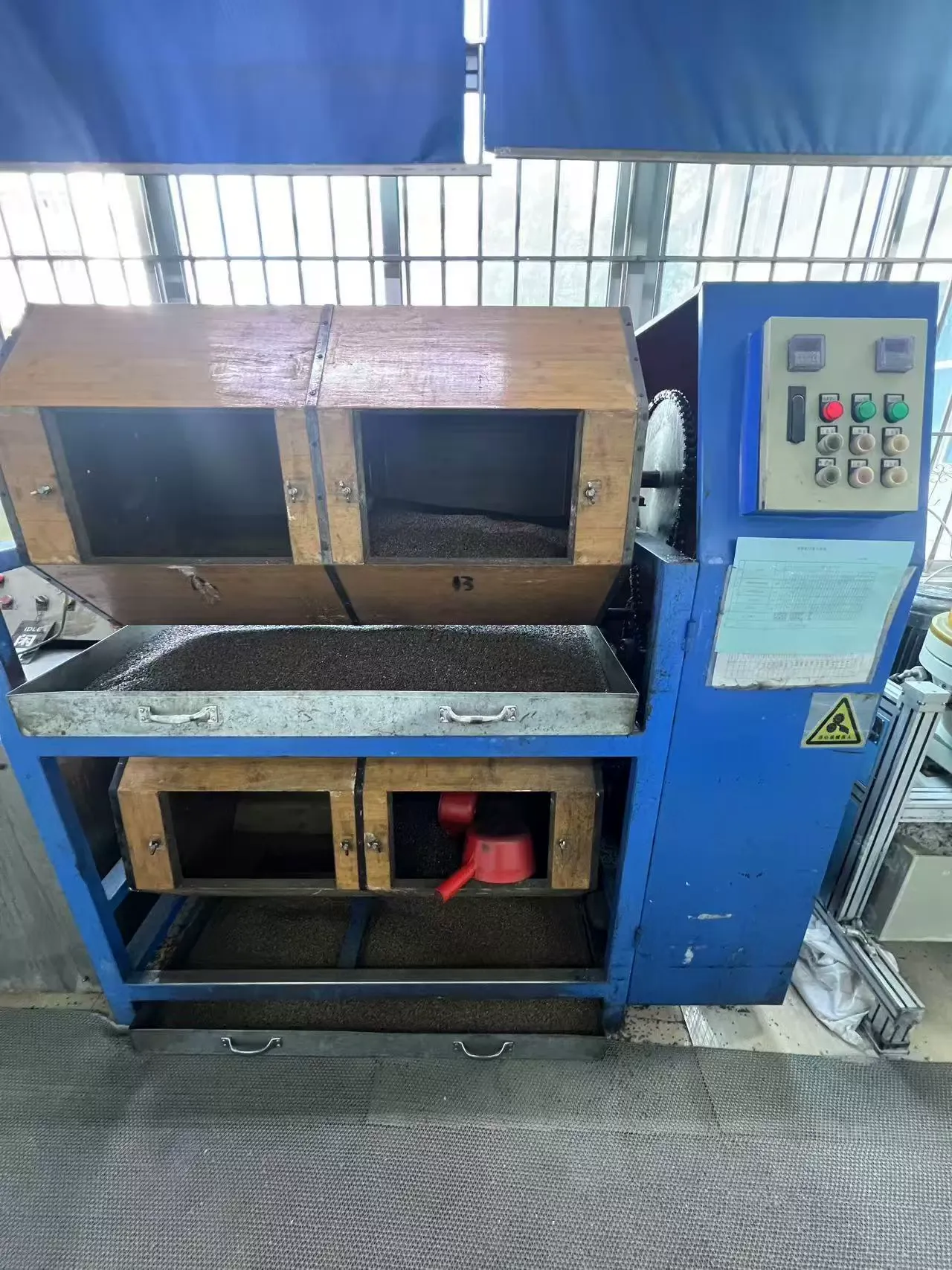
Can casting, filing, setting, polishing and plating stay in one batch?
Sometimes, operation by operation. A cast S925 piece normally moves through casting, filing and assembly, stone setting, then a finishing sequence of final polishing, marking and plating whose order depends on the piece: marking can run before or after polishing and plating, and on gold vermeil it moves ahead of the plating tank. Sharing a stage requires the same input at the same release date.
| Stage | Share when | Breaks the share | Schedule effect |
|---|---|---|---|
| Casting | Same alloy and release window | Different alloy or release date | Separate trees |
| Setting | Same stone diameter and program | New diameter or setting count | Separate run |
| Marking | Same logo and mark | Different brand or destination | Approval gate |
| Polishing | Same finish and media | Different finish | Barrel wait |
| Plating | Same finish and colour | Rhodium versus vermeil, second colour | One tank run each |
Plating is the constraint most buyers underestimate. A tank is a batch: rhodium and 18K vermeil are different tanks, two gold tones are two tanks, and a 40% lot does not shorten the cycle. A second finish is a second tank run, not a 40% surcharge.
Stone setting is the second divider. The same mold with a different stone diameter is not the same setting batch: the seat, the tool and the operator program change. Our published tolerance is ±0.05mm stone position under 40x magnification.
Marking is the third. There is no single fixed slot for laser engraving. Mark before final polishing and the polishing wheel can round the edges of the characters; mark after polishing and the piece needs another clean before packing. On plain S925 that choice is a scheduling detail; on gold vermeil it is a specification: a mark cut after plating opens the 18K gold layer inside the letterforms and lets the silver beneath show as contrast under a loupe, so the mark is cut before the plating tank — and the marking station then feeds the plating line. Either way marking sits between setting and packing, and the downstream stage it feeds is what a late logo approval delays, not the laser itself.
The 60% and 40% usually diverge in time at marking, not at casting. Ask one question: how many casting trees, setting runs, marking setups and plating tanks will this order create? That number, not the 60/40 ratio, is your real schedule.
How should S925 marking and testing be batched across two lots?
An in-house laser “S925” is a quality mark, not a hallmark. In the UK, silver articles under 7.78g are exempt; above that, the article needs assay office marks, as our UK and EU hallmarking guide sets out. Assay offices process work as packets with one hallnote per metal and standard, and each article is marked individually (Assay Office London). A hallmark means the article has been independently tested (Assay Office London).
The packet question is destination, sponsor and standard. Same all three, and one packet is possible, though every article is still marked. A factory mark on the 60% and your sponsor’s mark on the 40% means two packets. Different destinations mean two mark sets.
AQL 2.5 is a per-batch acceptance limit, so two lots mean two final inspections, two first-article approvals and two pull-test records. GRA certificates are per stone; third-party assay is per consignment. Do not let the 60%’s inspection release stand in for the 40%, even with identical geometry: the mark, the finish and the packing differ.
Book third-party testing and assay after marking and before packing. For UK or EU destinations, reserve space for assay marks at CAD stage; the marking plan and the plating plan must be approved together. Our article on laser etching placement and lead time covers the position rules.
Does the 40% clear MOQ per design and per stone size?
The percentage is the wrong unit. Convert it into pieces per design and pieces per stone size before you sign.
Take an illustrative 600-piece order. Forty percent is 240 pieces, and the table below runs that number across three assortments. The same 240 pieces is comfortable or impossible depending on how it is spread, not on the percentage.
| 40% pieces | Designs | Pieces per design | Published path |
|---|---|---|---|
| 240 | 6 | 40 | Stock-mold customization, 30–50 |
| 240 | 8 | 30 | At the 30–50 floor |
| 240 | 12 | 20 | Below every published path |
Forty percent by value is not forty percent by pieces. If the private-label capsule uses larger stones or gold vermeil while the stock half is a lighter chain, the 40% value share may be a much smaller share of units, and the per-design count collapses.
Stone size is its own axis. Tennis chains and eternity bands are built around a stone diameter, and every diameter needs its own seat, tool and stone purchase. 240 pieces across four stone sizes is 60 per size; across six sizes it is 40. Whether that clears a setting batch depends on a minimum that is not published; get it in writing. Our breakdown of mixed-order MOQ thresholds explains why order total, per design, per finish and per size are four different numbers.
If the math fails, three fixes work: cut the capsule to three or four designs; move borderline styles to stock-mold customization at 30–50 pieces instead of full OEM at 50–100; or push the lowest-volume designs into the 60% stock order.
What should the purchase order say to keep the split on schedule?
- Two lot blocks with separate lot IDs, even under one PO number.
- Per design: mold ID and status (public, customized, buyer-exclusive), stone diameter, finish, mark and packing.
- Two release dates, two ship dates, and a named storage responsibility if the 60% is held for a single launch.
- The marking approval deadline and the number of plating runs the order is expected to create.
- Inspection standard per lot: AQL 2.5, 100% claw and pull test, first article retained.
- Change control: a design change after the 60% releases creates a new lot; released stock is not reworked.
One blended total hides every check above; the lot structure is what makes the schedule auditable. At 30% deposit and 70% before shipment, two shipments mean two balance payments and two document sets.
FAQ: 60/40 splits, molds, plating and marking
Is a 60/40 split more expensive than putting 100% on one path?
Usually on the 40%, and not necessarily on the 60%. Small private-label lots carry a sample round, a marking setup and their own tank runs; the 60% stock half can be cheaper per piece than a small all-private-label order. Ask for pricing by lot, not a blended unit price.
Can both lots ship together?
Yes, if you hold the 60% until the 40% is ready. That costs warehouse time and delays the 60% balance; shipping separately costs freight and documents. Neither is wrong, but one has to be chosen in the PO.
Can the 40% use the same mold as the 60%?
Yes when it is a public stock mold and the private-label change is post-casting: logo, plating, or a stone upgrade within the existing seat. No when the 40% needs a new mold. That mold is buyer-exclusive and cannot supply public stock.
Do the two lots need separate S925 testing?
Separate lot records, yes. AQL 2.5 applies per batch, and pull testing is 100% per lot. GRA certificates are per stone; third-party assay is per consignment.
What single question reveals the real schedule?
“How many casting trees, setting runs, marking setups and plating tanks will this order create, and what is the release date of each?” The answer is the schedule; the 60/40 percentage is only the budget.
How Amara Jeweiry handles a split S925 order
Amara Jeweiry has manufactured S925 silver moissanite jewelry in Shenzhen’s Shuibei hub since 2010, with CAD, wax printing, stone setting, plating and QC in-house. Published terms that matter here: MOQ 30 pieces on the order total, 30–50 per design for stock-mold customization and 50–100 for full OEM/ODM; samples in 7–10 days after CAD sign-off; bulk in 15–25 days; reorders in 10–15 days; molds and CAD stored free for three years and never reused; AQL 2.5 final inspection with 100% claw and pull testing; rhodium or 18K vermeil at ≥2.5µm; S925 and workshop marks applied where required, with laser-engraved logos on the inner band, clasp or tag.
If you are planning a 60/40 split, send both line lists together and ask for two lot-level schedules rather than one blended quote. Review the wholesale program, the custom OEM/ODM process, the FAQ and our certifications, or send your designs for a quote within 12 hours.