








Short answer: Yes, you can ask for a video of your actual production batch, and you should make it a condition of the balance payment rather than a favor requested after the shipping documents arrive. A useful batch video is not a clip of one approved sample. It is one continuous, unedited recording that opens on your order number, date and carton count; shows cartons chosen at random being opened and counted; holds focus on plating edges and stone settings; and ends on sealed cartons, labels and the certificate pack. What it cannot do is measure silver purity, nickel release or plating thickness in microns, or prove that every unit passed inspection. Those claims require test reports and inspection records.
Why does a sample photo fail as batch evidence?
A sample is one object, approved at one moment. Your order is a lot: many units made across a production window, packed into several cartons, with normal variation in casting, polishing, plating and setting. A photograph of the approved sample cannot tell you which carton it came from, whether the other pieces match, or whether the pictured piece is in the shipment.
The default you should expect is exactly that photo set. Sample approval is where photographs are naturally produced, so when bulk is ready, those images already exist. Filming a real batch interrupts packing and puts imperfections on record. It is rarely a trick; it is the cheapest document the sales team can produce.
Generic pre-shipment templates written for bags, fans or auto parts ask for an order-number photo and packed-carton shots. They do not specify a continuous take, random selection, plating wear at contact points or pavé seating.
What should a batch video actually show? Five parts
Ask for all five in one request, and put the request in the purchase order.
1. What belongs on the identity board?
Before any product appears, hold on a board showing the purchase order number, shoot date, SKU list, total quantity and carton count. Then pan to the cartons so their labels can be read against it. A board is easy to fake alone; its value is appearing at both ends of the same take.
2. How should cartons be selected and opened?
Ask the operator to choose cartons from finished goods, not a table prepared for the shoot. If you have a packing list, name the carton numbers yourself: one from the start, one from the middle, one from the end. The seal should be intact on entry, and the cut should happen on camera. Count the contents against the packing list and show the packaging and batch label. Amara publishes that bulk shipments use OPP individual packaging with batch labels and certificates, three things to match on screen.
3. What should plating and setting close-ups show?
Plating: ask for raking light across the clasp, edges and inner band, where wear shows first. A soft-light beauty angle hides thinning. Video can show color, coverage and obvious defects, but not thickness. If the factory has an XRF gauge, show the reading beside the SKU; treat it as an indicator, not the controlling record.
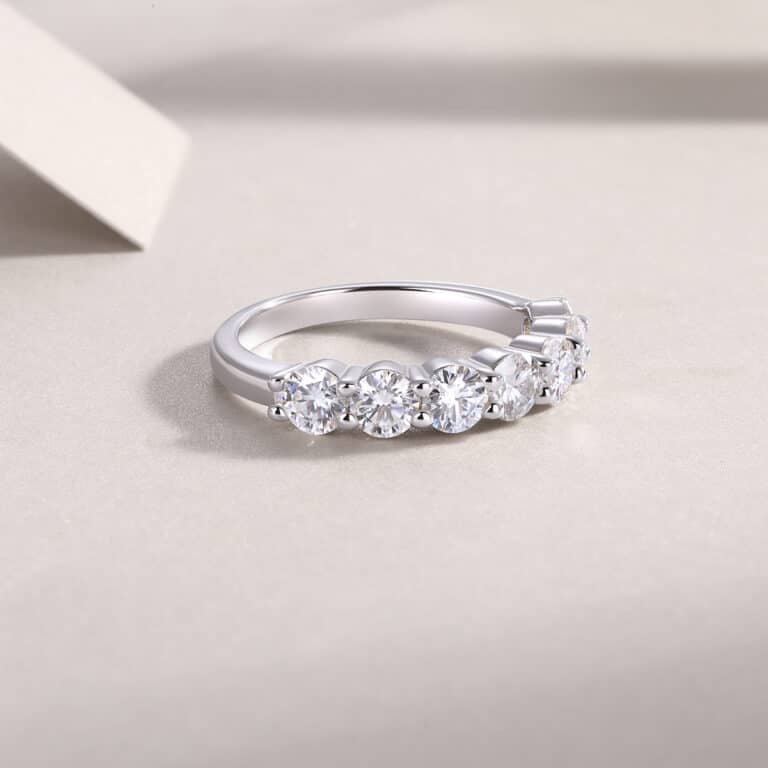
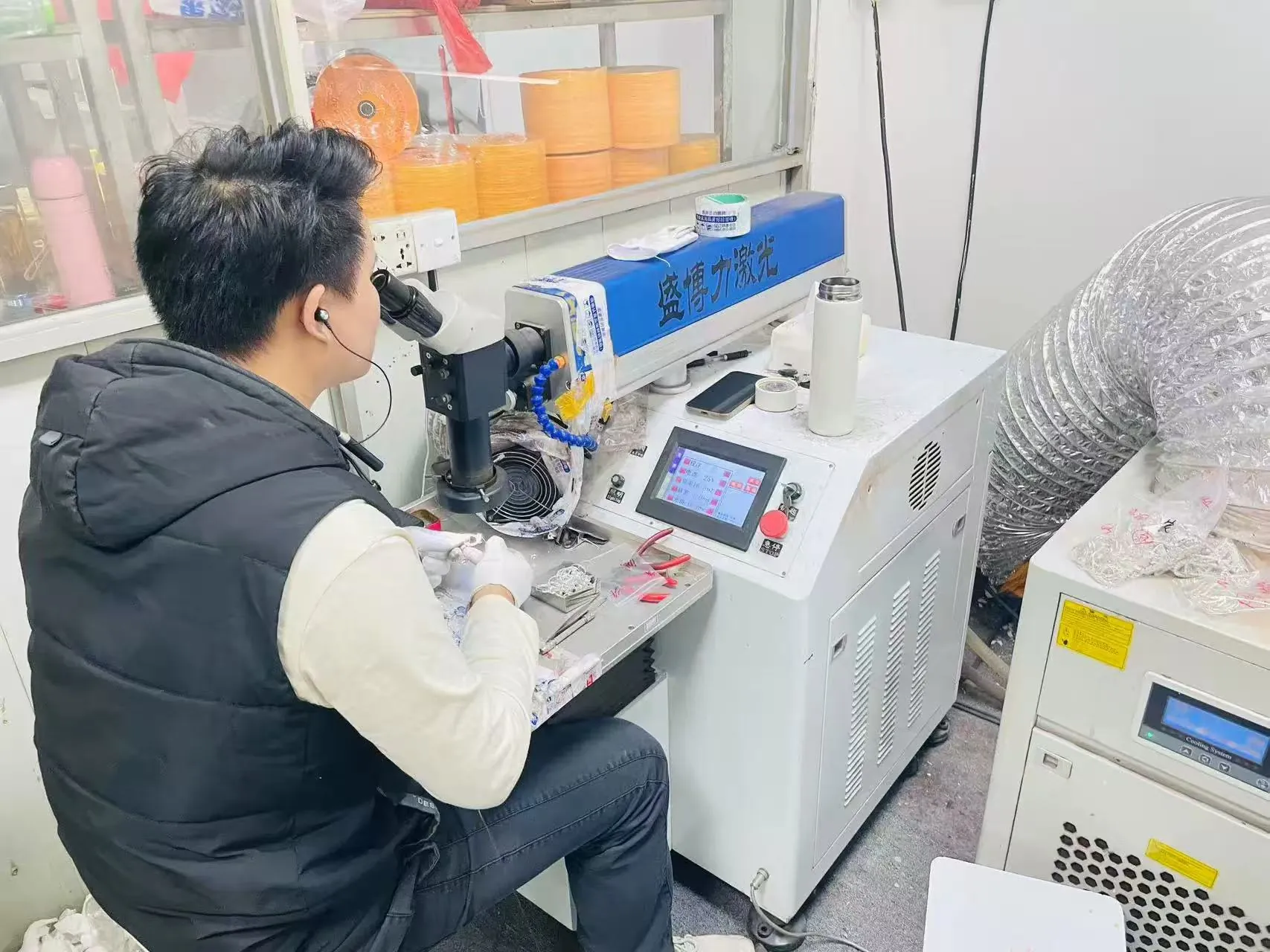
Stone setting: ask for a microscope view, not a phone held near the piece. Amara sets micro-pavé under 40x magnification with a stated stone-position tolerance of plus or minus 0.05 mm. Look for prongs seated, stones level, no gaps or adhesive. Ask for five pieces from different trays, tilted so light moves across the stones. One perfect ring proves nothing about a tray of five hundred.
4. Why insist on one continuous take?
Buyers often forget this part. A cut is where a tray can be swapped or a different batch substituted. Ask for one continuous recording from identity board to sealed carton, with no transitions, speed changes, inserted stills or music covering room sound. If the file is too large, ask for sequential files that each begin and end on the same board, with overlapping footage. Continuous room audio helps: it is harder to splice than silence.
5. How should the video end?
The last minute should be specific: a slow pan across every sealed carton, the count read aloud, shipping marks and labels visible, the certificate pack shown, and the identity board back in frame. If the board count does not match the final pan, the video failed its own test. This also confirms the goods are packed, the stage the balance releases.
Tour, sample photo or batch video: which one do you have?
Three records get confused, and the names for them get used interchangeably. A live factory tour proves the floor exists and the process is running; Amara offers these to buyers, useful for qualifying a supplier. A sample photo proves a design was approved at a point in time. A batch video proves the lot about to ship exists, and only it ties product to an order number and a carton count in the same frame.
The substitution to watch for is a supplier sending the cheapest of the three and calling the result a batch video. Photographs are already filed from approval, and a tour can be arranged at short notice; neither carries a carton count, a shoot date or a continuous take. Ask which record you have been sent before judging it. A highlight reel edited at the sample table is a sample photo in motion.
When should you request the batch video relative to the balance?
Request it when you place the order, not when the goods are ready. The purchase order should say the balance falls due after the buyer receives a conforming batch video and the final inspection records, and before the goods are handed to the carrier. That sequence gives the video a purpose: a last chance to catch a problem while the goods remain in the factory.
Timing depends on the production calendar. Amara publishes sample lead times of 7 to 10 days, first bulk orders of 15 to 25 days and reorders of 10 to 15 days, with 30 percent deposit and 70 percent balance before shipment, as listed in its payment FAQ. A request squeezed into the last day will be rushed or refused. Ask after final inspection and packing, with a clear window to film before the balance date.
If the video arrives with the balance request, your leverage is lower. The practical rule: the video is a deliverable, not a courtesy. Put it in the inspection clause and make acceptance a condition of the balance, subject to your contract terms.
What can a video not prove?
A batch video is strong evidence of identity, selection and workmanship visible to the camera. It is weak for properties that require instruments, laboratories or statistical records.
Can video prove silver purity?
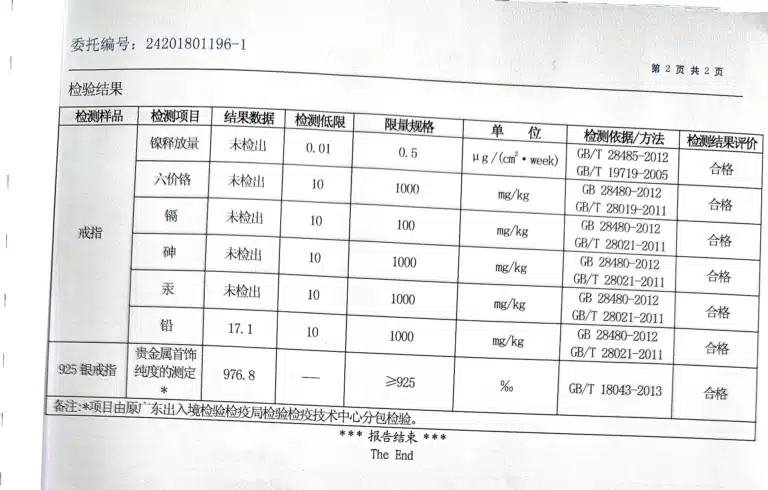
No camera can distinguish 925 silver from plated base metal or measure fineness. Purity comes from an assay or third-party test report. Amara publishes a third-party tested silver purity of 976.8 per mille, with the report pack travelling with the goods; that document, not video, supports the claim. Ask for the report number and testing scope on the certification page.
Can video prove nickel release or plating thickness?
Nickel release is a laboratory test, and plating thickness is a measurement in microns. Video can show color and coverage, not whether the gold layer meets a thickness standard. The legal definition of vermeil, for instance, requires a sterling silver base coated on all significant surfaces with gold or a gold alloy of at least 10 karat fineness, at a minimum thickness equivalent to 2.5 microns of fine gold; no camera can verify any of that. Amara publishes 18K gold vermeil at 2.5 microns or more over recycled 925 silver, with nickel-release testing on the base; the test report is the proof. If plating failure worries you, our guide covers who pays and what to document.
Can video prove every unit was inspected?
AQL 2.5 is a lot acceptance rule, not a promise that every piece was examined. It defines a sample size and acceptance number for the lot. A video of five pieces is a sample too. Ask which operations run on 100 percent of pieces and which are sampled. Amara states that claw checks and pull testing are performed on every piece, twice, before plating and before packing, in addition to AQL 2.5 final inspection. That is stronger than a video or an AQL result alone.
Can video prove stone identity?
Video can show a girdle inscription under magnification and the certificate card. It cannot authenticate the stone. Verify the certificate number with the issuing laboratory and check that the inscription matches. Amara ships GRA certificates and publishes GRA and CMA documentation; verification is still yours.
Can you trust the footage?
Metadata can be stripped and a determined supplier can stage a scene. The defenses are procedural: random carton selection by the buyer, one continuous take, the identity board at both ends, and cross-checks against the packing list, inspection records and shipping documents. A batch video raises the cost of hiding a problem. It does not make hiding impossible.
What should the purchase order clause say?
You need wording specific enough to be checked, not a legal document. Adapt the following and have your own counsel review it:
- The seller will provide one continuous, unedited video of the finished batch, filmed after final inspection and packing, before the balance payment is due.
- The first and last frames will show a board with the purchase order number, shoot date, SKU list, quantity and carton count.
- At least three cartons, selected by the buyer or at random, will be opened on camera with seals intact and counted against the packing list.
- The video will include close-ups of plating at the clasp and edges, and of stone setting under at least 40x magnification, on at least five pieces from different trays.
- The video is additional to, not a substitute for, AQL 2.5 inspection records, 100 percent pull-test records and third-party test reports.
- The balance is payable after the buyer confirms the video and documents conform to this clause, and the goods remain with the seller until then.
FAQ: batch videos, samples and balance payments
Can I get a video of my actual production batch before it ships?
Yes, if you ask before production ends and put it in the purchase order. Many factories will not offer it by default, but ten minutes at the packing table suffice. Asking after packing and invoicing leaves only the sample photo set.
Is a live video call better than a recorded video?
They do different jobs. A live call lets you choose the carton and ask the operator to turn a piece toward the light. A recording gives you a file to pause, compare and keep. Ask for both: a live call for direction and a continuous recording of the same session. Amara’s factory tours are live on any working day, but a tour is not a batch record.
How long should the batch video be?
There is no industry-standard length. The test is coverage, not minutes. A small order can be covered in five to ten minutes if the five parts appear without cuts; a multi-SKU order takes longer. Reject a two-minute highlight reel.
What if the factory refuses or sends the sample photos again?
Treat refusal as information. Some factories cannot film inside packing; some would rather not create a record. If the video matters, make it a condition before the deposit or shift budget to a pre-shipment inspection. If production is running, tie it to the balance and be ready to accept a documented inspection report.
Does a batch video replace an AQL inspection or a third-party PSI?
No. A video documents what the camera is shown; an inspection applies a sampling plan and produces an accept or reject decision. A video shows the carton that was opened; an inspection defines how many should be opened and what defect rate is acceptable.
Can a batch video prove the whole order is defect-free?
No. It can prove the batch exists and that the pieces on camera meet your visual standard. It cannot prove the absence of defects in pieces the camera never saw. That is why it belongs alongside inspection records, not in place of them.