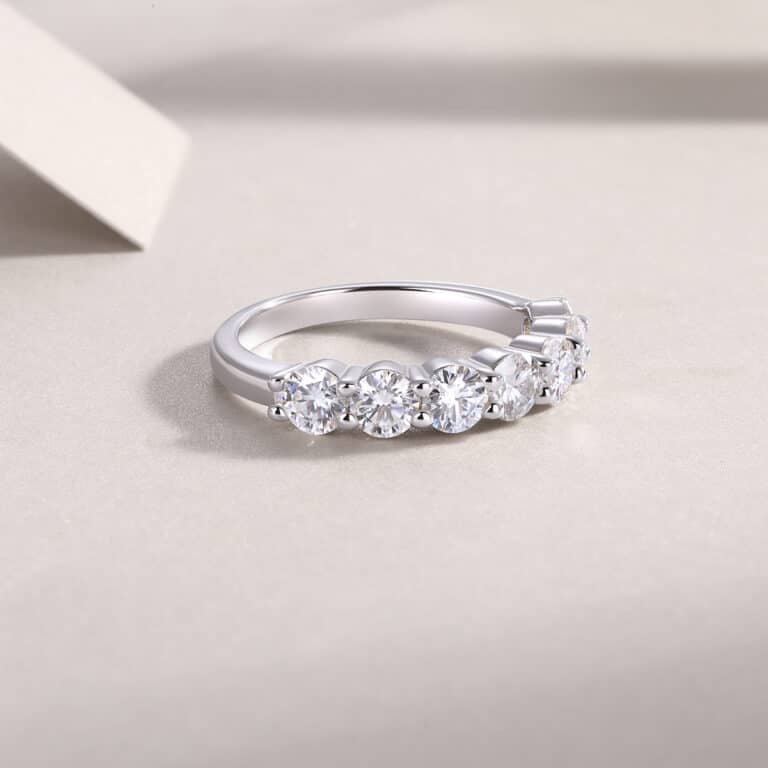








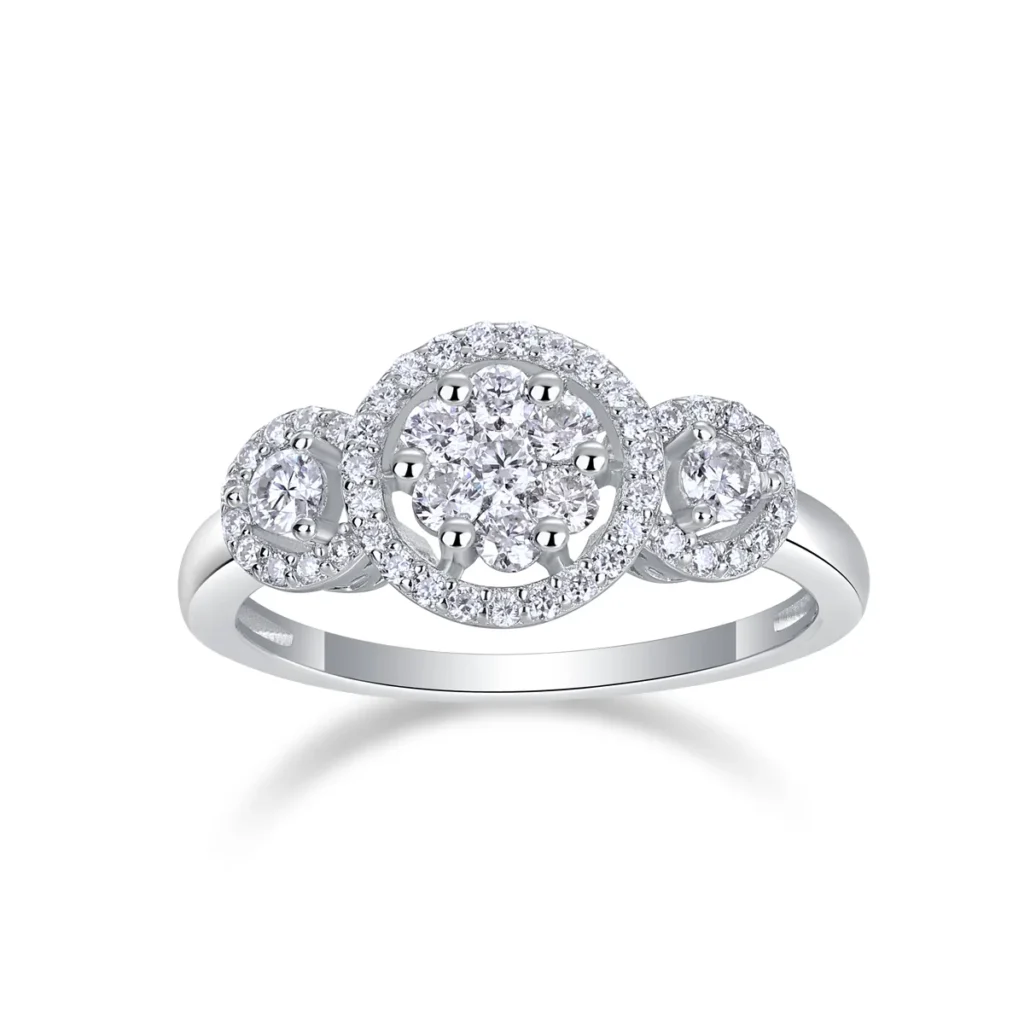
Yes — 100 pieces split across 4 styles is a workable first order for a direct S925 casting factory, and rubber-mold casting is normally the route for it. Silver workshops count mixed-style minimums differently from apparel: at Amara Jeweiry, MOQ 30 applies to the order total with styles and sizes mixed, while full OEM/ODM with new tooling runs 50–100 pieces per design. Your four styles can therefore fit inside one 100-piece order, or trigger a 200-piece effective minimum, depending on the tooling tier each style rides. Settle it before the deposit with a casting-route confirmation: which styles can be pulled from a vulcanized rubber mold, how many wax pulls each mold is rated for, what the tooling fee and mold-ownership terms are, and which details — micro-pavé seats, thin filigree, deep relief — push a style onto vacuum-assisted casting. Then approve a golden sample per style.
Can a Factory Cast 100 Pieces in 4 Styles From Rubber Molds, or Does That Force Machine Casting?
The question hides a false either/or. Rubber-mold casting versus machine casting is not an order-size decision that applies to a whole order; it is a per-style route decision. A factory can pull three of your styles from hand-cut rubber molds and run the fourth on vacuum-assisted casting inside the same purchase order, because the minimum is driven by tooling, not by the casting route. If you are still sizing the first order itself, how an 80-piece moissanite test order maps against the same minimums is worth a read before you fix the style count.
How the minimum is counted matters just as much. Apparel-style ladders assume every new style opens its own minimum; established S925 silver factories do not work that way at the test-order stage. Our published rule is that “MOQ 30 pieces applies to the order total, not per SKU, with styles and sizes mixed.” The setup that each new design actually consumes is “a CAD model, a 3D-printed wax, a rubber mold, casting trees, and setting seats” — and that setup is what the higher custom tier prices in.
So map your 100 pieces against three published tiers. Stock designs, ordered as-is, carry an MOQ of 30 pieces across the whole order. Stock-mold customization — your logo, a stone upgrade, a plating change on an existing mold — runs 30–50 pieces per design. Full OEM/ODM, where all four styles are carved and molded from scratch, runs 50–100 pieces per design to amortize that new tooling. Twenty-five pieces per style therefore fits comfortably if your styles ride stock or stock-mold tooling. If all four need brand-new molds under a strict per-design reading, the effective minimum becomes 200 pieces, so you should know that before wiring a deposit, not after — and if your mix is closer to ten styles at small counts, the trade-offs are laid out in what actually drives the MOQ on 10 styles at 20 pieces each.
Two details work in your favor. First, sizes count together: a run of one ring design across US sizes 5–9 still counts as one quantity against one mold. Second, samples are credited against the bulk order on our process, so sampling a four-style line adds no sunk cost.
How Does Rubber-Mold Casting Actually Work for a 100-Piece S925 Batch?
Rubber-mold casting is the classic small-batch route in silver jewelry, and it is worth knowing the chain so your questions are precise. The studio builds a master — on our floor, a CAD model confirmed with you, then a 3D-printed wax with free revisions before any metal is cut. The approved master is vulcanized into rubber, a mold cutter hand-cuts the rubber away along the parting line, and that mold becomes the production tool: wax is injected into it, the wax copies are mounted on a casting tree, invested, burned out, and molten 925 silver is poured by hand or under vacuum.
The part most citation pages skip is replication. A rubber mold is a consumable production tool, not a permanent asset. Every wax injection cycle works the rubber: flexing during demolding, heat from the injected wax, and the cutter’s knife all take a small toll. Sharp edges, hairline filigree, and engraved lettering are the first details to soften. A well-cut mold produces clean pulls for a long run, but how many pulls a given mold is rated for before re-cutting depends on the rubber compound, the cutter’s skill, and how delicate the master is. No factory publishes a single universal number, and ours does not either — which is exactly why the count belongs on your written confirmation list, verified against the golden sample and a first-article pull rather than a marketing page. For the other side of that same equation — what happens when the count runs out mid-run — a 3,000-piece S925 run where one mold wore out and the re-cut bill had to land somewhere shows how factories and buyers split that cost.
Timing on this route is published and predictable: 48-hour design-to-wax turnaround, a sample in 7–10 days taken from the production line, and mass production in 15–25 days once it is approved. Reorders, where the mold exists, drop to 10–15 days.
Which Design Details Push a Style Onto Machine-Assisted Casting?
Machine-assisted (vacuum) casting exists because hand pouring has physical limits. Molten silver must fill every branch of a tree before it freezes; fine sections freeze first, and a hand pour can leave voids exactly where your design is most delicate. These details are the practical triggers, each judged on your CAD or wax before any metal is cast:
- Micro-pavé seats. We set stones under 40x magnification to a published stone position tolerance of ±0.05mm. Seat walls that come out of a tired rubber mold — slightly rounded, slightly porous — turn into claw failures at pull testing. Consistent seats usually favor fresh mold pulls or vacuum casting.
- Thin sections and fine filigree. Hairline straps, knife-edge bands, and open filigree fill less reliably by hand pour; vacuum assists those sections.
- Deep relief and sharp undercuts. These stress the rubber at demolding, tear delicate wax copies, and shorten mold life. A factory may respond by changing the mold material, splitting the mold, or moving the style to a different casting route.
- Hollow or multi-part constructions. Anything assembled after casting needs repeatable registration between parts, which favors the tighter process control of machine-assisted casting.
- Stone-in-place casting. Stones set into the wax before casting demand dimensionally stable seats batch after batch — a fresh, well-kept mold at minimum, vacuum assist often preferred.
Notice what is not on that list: order quantity. The buyer’s instinct — that “machine casting means a higher minimum” — has the causality backwards. The casting route follows the details; the minimum follows the tooling. A vacuum-cast style can sit inside the same 100-piece order as three rubber-mold styles, because all four share the same trees, setters, and MOQ logic.
What Should You Inspect on the Golden Sample Before Mass Production?
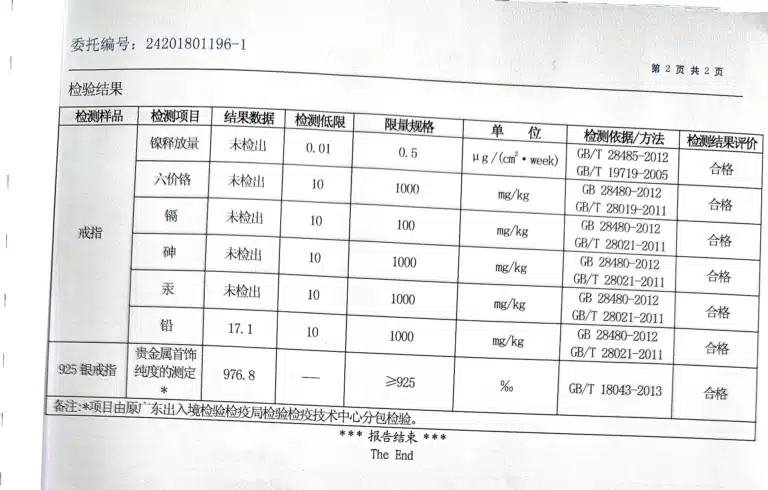
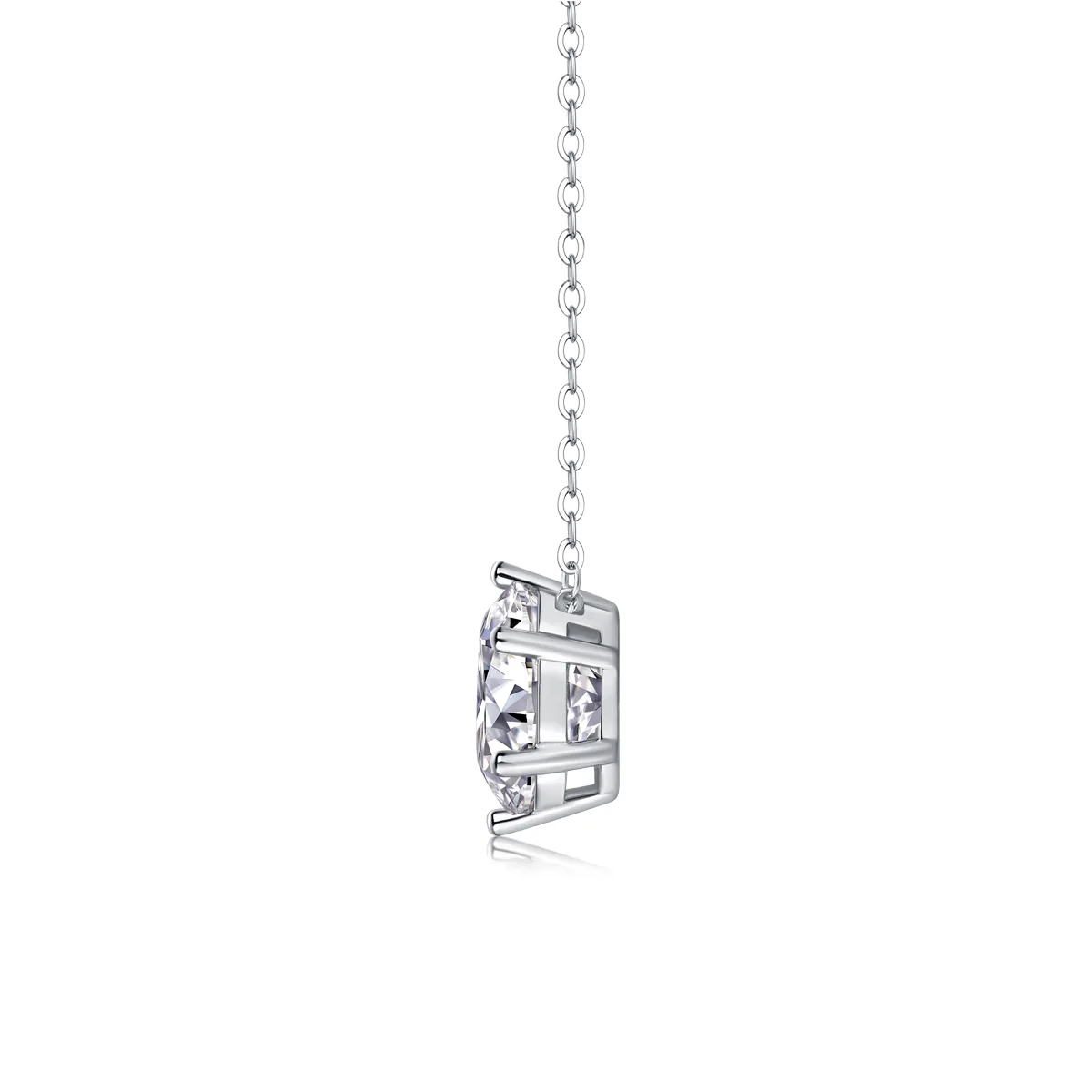
The casting-route confirmation ends in an object, not an email: an approved golden sample per style with written criteria, the discipline our factory-vetting guide insists on, along with the difference between what a sample-room piece proves and what a production-run piece must (pre-production sample vs production run). Judge it the way production will be judged: turn to the side profile and read the cast skin, gate mark, parting line, and seat alignment in one view. Weigh it — we hold a published ±3% weight tolerance, and a sample that hits it tells you the mold and the casting route are stable. Check the stamping: “925” is a legal fineness claim — under the U.S. FTC’s Guides for the Jewelry Industry (16 CFR Part 23), the abbreviation “Ster.” may not be used unless the product is at least 925 parts per thousand pure silver (see 16 CFR § 23.5, Silver Products on eCFR) — and our own third-party assay under GB 28480-2012 reports 976.8‰ with nickel not detected.
Then set the inspection regime in the purchase order: our floor already runs 100% claw check and pull testing plus AQL 2.5 final inspection, and the vetting habit that matters on small batches is random carton pulls re-tested before the 70% balance payment. A route confirmed on paper and verified on a golden sample is the only “yes, rubber molds work” that survives production.
The Casting-Route Confirmation Checklist to Send Before Your Deposit
Send these ten items in writing, per style, before the 30% deposit. A factory-direct workshop that casts in-house will answer all of them in a single email; evasion on any item is your signal to keep vetting.
- Route per style: which of the 4 styles will be pulled from a hand-cut rubber mold and which need vacuum-assisted casting — with the reason for each.
- Rated pulls per mold: how many wax pulls each mold is rated for before re-cutting, and who absorbs the re-cut cost if a mold softens mid-run.
- Initial tooling fee: the per-mold charge for new tooling, itemized. Published pages here state the storage and exclusivity terms but not the fee amount, so get the figure in the quote, not verbally — the same line item our guide to private-label setup fees, molds, and reorder billing says belongs in the contract, not the email thread.
- Mold ownership and storage: our published terms are that “molds and CAD stay yours exclusively, stored free for 3 years, never reused for another customer” — confirm those words cover the physical rubber molds, not only the CAD files.
- Reorder economics: our custom page states “No tooling fee on reorders” — confirm a re-cut or replacement mold on a reorder counts as a reorder, not new tooling.
- In-house scope: ask which processes are in-house — casting, setting, plating — and which are bought in. Our floor finishes design, 3D wax printing, stone setting, electroplating and QC in the same Shenzhen facility.
- MOQ counting in the PO: whether the 100 pieces are counted as an order total with styles mixed, or per design — and the tier each style rides: stock, stock-mold customization, or full OEM/ODM.
- Golden sample and first article: a golden sample per style with written criteria, plus a first-article pull from the production mold approved before the balance of the tree is cast.
- Fineness documentation: the assay report for the batch, checked against the 925‰ sterling threshold — the same 4/1000 tolerance logic that decides whether an S925 ring assayed at 91.8% silver supports a claim — so the “925” stamp on each piece is backed by numbers.
- Timeline per route: 7–10 days for samples, 15–25 days for the first bulk run, 10–15 days for reorders — and whether vacuum-cast styles carry any different lead time.
FAQ: Rubber Molds, MOQ and Small-Batch S925 Casting
Is 100 pieces in 4 styles one MOQ or four?
At the stock and stock-mold tiers it is one: the published rule counts MOQ against the order total with styles and sizes mixed, and ring sizes share a single mold. At the full OEM/ODM tier, tooling is priced per design, so a strict per-design minimum of 50–100 applies to each style needing a brand-new mold. Which tier each style rides is precisely what the casting-route confirmation settles in writing.
Does rubber-mold casting cost more per piece than machine casting?
The per-piece casting cost difference is small next to the tooling math. A rubber mold amortizes across the run and is stored free for three years under our published terms, so the economics improve on every reorder — and reorders carry no tooling fee. The real cost risk is not the route; it is paying for a mold twice because the design needed vacuum casting after the fact. That is why the route is confirmed on the CAD or wax, before metal is cut.
Who owns the rubber mold after the first order?
Under our published OEM/ODM terms, the molds and the CAD stay yours exclusively, stored free for three years, never reused for another customer, and customer programs are physically partitioned in storage. Our vetting guide recommends you also confirm transferability — that your molds, plating specifications and stone lots can move with you — and settle it upfront in the same document as the NDA and the itemized quote.
How do I verify casting quality before paying the balance?
Three layers, all written into the PO. Before bulk: a golden sample per style approved against written criteria. During production: 100% claw check and pull testing on every piece — our published floor standard — plus a first-article pull from the production mold. Before the 70% balance: random carton pulls re-tested on receipt. Paper reports support these checks; they never replace them.
The Bottom Line for a 100-Piece, 4-Style S925 Order
A 100-piece first order in 4 styles sits inside the published minimums of a factory-direct S925 workshop as long as the tooling tier is mapped honestly: order-total counting and shared molds make 25 pieces per style realistic, and per-design OEM minimums are the only mechanism that can push the effective total to 200. Rubber-mold casting will carry most styles at this volume; micro-pavé seats, thin filigree, deep relief, and stone-in-place move a single style onto vacuum assist without changing the minimum. The difference between a smooth test order and an expensive lesson is ten written answers and an approved golden sample — get both before the deposit.