







Short answer: in most cases, no — provided your card printer runs variable-data digital printing and quotes setup per order, not per design. On digital toner and inkjet presses there are no plates: the imaging head repaints every sheet from a data file, so 300 different card designs can be imposed and printed as one run, and the per-unit price moves only slightly. On conventional offset litho, every design needs its own plate set plus a press wash-up, so 300 designs becomes 300 setup events spread across a run of one piece each — and that is exactly where the per-unit packaging cost explodes. Before you compare prices, pin down four things: whether the setup fee is charged once per order or once per design version, whether all versions can be ganged into one variable-data run, what the minimum quantity per design version is, and how each version’s proof is charged.
What you are actually paying for on an earring card
An earring card quote normally breaks into five cost lines, and only one of them cares how many designs you have:
- Board stock — the paperboard itself, priced by size and thickness. It does not know whether 300 cards carry one artwork or 300.
- Printing — ink or toner on the sheet, plus the prepress work to get each design print-ready.
- Finishing — lamination, spot varnish, foil stamping or embossing, applied to the sheet after printing.
- Die-cutting — the card shape and the hang holes; usually one shared cutting die regardless of artwork.
- Handling — cutting, counting, packing, and (if the factory does it) inserting each pair of studs and bagging.
The design count enters the price almost entirely through prepress: plates or RIP processing, press setup, and proofs. Board, die-cutting, and handling scale with quantity, not with version count. That is why the same 300-card order can be a routine job at one printer and a surcharged special at another — the difference is which cost model the vendor uses, not the paper.

When 300 designs means 300 setup charges — and when it does not
On an offset press, each design is burned onto a plate set, the press is washed and set up for that plate set, and makeready sheets are wasted tuning color. At 300 pieces of one design, that setup amortizes into a small fraction of each card. At one piece per design, it never amortizes: you pay the full setup 300 times for a run that uses it once. Any offset printer quoting your job honestly will either charge a per-design setup or decline the job.
Variable-data digital printing works differently. A digital press images each sheet on the fly from a data file; there is no plate to make and no wash-up between versions. Your 300 designs become one imposition — 300 pages inside a single print-ready PDF — run in one pass. The vendor charges data preparation and RIP time once for the job, not once per design. This is the same class of technology that prints personalized direct mail and sequentially numbered tickets, and it is the standard answer to the 300-pairs, 300-cards problem.
Use these criteria to judge whether your job actually qualifies for the single-run treatment:
- Same size, same stock for all versions. Variable data changes artwork, not dimensions. If some designs are 5 cm and others 8 cm, you have two runs, not one.
- Changes live inside the artwork, not the finishing. Swapping logos, colorways, names, QR codes, or price text is what digital handles in stride. If every design needs its own foil color or emboss die, you are back to per-design analog tooling.
- Color tolerance is realistic. Digital presses reproduce most brand colors well but do not always hit a strict spot-color match. If one design must match an exact Pantone reference, that design may need offset — and its own plates.
- The card fits the digital press sheet. Most standard earring card sizes do; oversized display headers may not.
- Artwork arrives print-ready. Three hundred files that each need manual cleanup turn “one digital run” into a prepress billing exercise.
How to phrase the RFQ so a per-design setup cannot hide
The cost model is not always visible in a one-line quote, so ask in a way that forces it into the open. Send every vendor the same three questions:
- “Is your setup charge billed once per order or once per design version? Please show it as a separate line.”
- “For 300 versions at one piece each, quote the one-time prepress and data-prep fee, the per-unit print price, and any per-version charge — with the version count of 300 stated in the line items.”
- “What changes in your price if I reduce this to 10 versions at 30 pieces each, on the same board and finishing?”
That third question is the diagnostic. If the total collapses when the version count drops, the vendor is charging per design; if it barely moves, they are charging per order and running digital. The same logic governs jewelry tooling: our guide to private-label billing defines the fair structure as setup charged once, when a style is created, and never again on a reorder that does not change the design, and our mixed-order MOQ guide spells out that the MOQ of 30 pieces applies to the order total, not per SKU. Ask your card printer to answer at the same level of specificity, and hold the quote to it.
Per-design minimums and proofing fees: the two quiet multipliers
Even a digital-native printer can add per-version costs in two places:
- Minimum quantity per version. Some shops impose a floor — for example, no version under a stated quantity — for imposition or finishing-waste reasons. Ask directly: “What is your minimum per design version on a variable-data run?” If that floor is higher than your per-design quantity, which is one in the extreme case, the quote quietly becomes the floor times 300.
- Proofs per version. A hard proof for each of 300 designs can cost more than the printing. Standard practice for variable-data work is to hard-proof one representative version plus a contact sheet showing all versions scaled down, and soft-proof the rest against an agreed color target. Ask what the proof method is before assuming a per-version proof fee.
File delivery affects both. The cleanest submission is one multi-page PDF with pages in a defined order, plus a spreadsheet mapping each page number to its SKU. Three hundred loose files with inconsistent bleeds invite per-file preflight charges — which are per-design setup fees under another name.
How the cards interact with the jewelry order itself
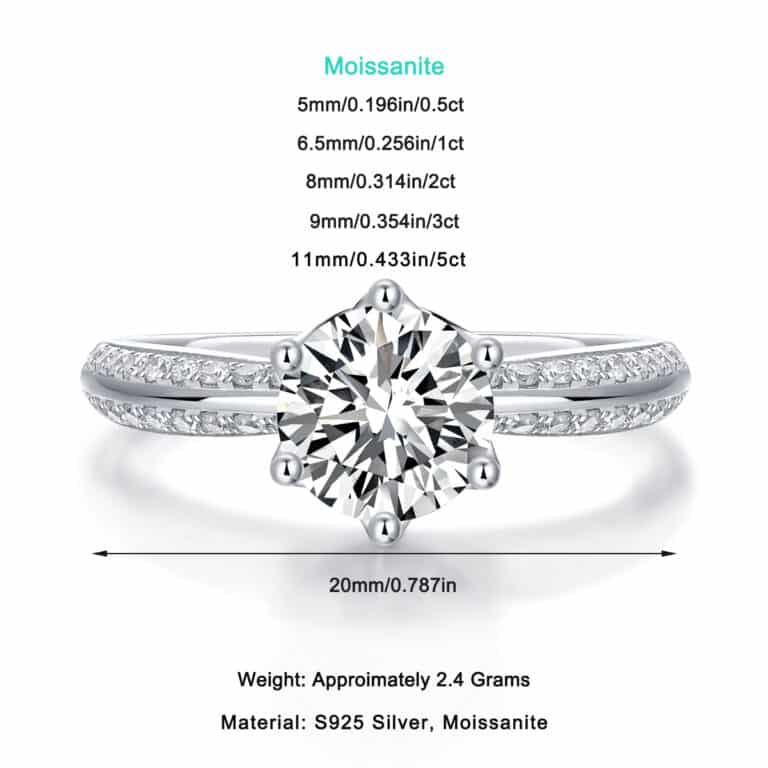
The card run is a parallel purchase, and it should not disturb the jewelry minimum. For the studs themselves — see the moissanite earrings range — published wholesale terms start at 30–50 pieces for ready-to-ship 925 silver designs, and 50–100 pieces for full OEM/ODM projects. The mixed-order rule is explicit that MOQ applies to the order total, not per SKU, so 300 pairs of one stud style clears the jewelry minimum comfortably; it is only the cards that vary by design.
On the packaging side, what we publish is what we can contract: laser-engraved logos, custom OPP bags with barcodes, and branded gift boxes including festival editions. Dedicated earring-card printing is not a listed service, so the typical workflow is to source printed cards from a print vendor and confirm with the factory who inserts the pairs and packs. Jewelry lead times stay as published — 7–10 days for samples, 15–25 days for a first bulk order, 10–15 days for reorders — which leaves room to have cards produced in parallel with the jewelry rather than in series.
The personalization economics you already know from jewelry carry over too. Laser-etching a brand name next to the 925 stamp prices as a small per-unit addition on volume runs rather than as a per-design project — the same reason a variable-data card run should not price like 300 separate print jobs.
The 1/10/300 comparison checklist
Before you commit, benchmark every candidate printer across three tiers on an identical spec sheet: 1 design × 300 cards as your baseline, 10 designs × 30 cards each, and 300 designs × 1 card each. Keep board, size, thickness, finishing, and proof method identical across tiers, then compare:
- The tier-to-tier ratio. If the 300-design total is roughly the 1-design total plus a modest data fee, the vendor is digital and per-order. If the 300-design total runs to hundreds of setups, they are quoting per-design analog work.
- Where the version count appears. Itemized lines should say “300 versions” or “data prep for 300 pages.” A quote that buries the version count in a lump sum is a per-design quote in disguise.
- The reorder path. Ask what a repeat of the same 300 cards costs next season. On digital it is a data pull plus a print run — no new setup. This mirrors the mold-retention logic on the jewelry side, where our guide to reordering 300 S925 pieces mid-season explains that unchanged reorders ride on retained tooling rather than new setup.
- Turnaround at the 300-design tier. One digital run should take days, not weeks. If 300 versions triples the lead time, the “digital” printer is really preflighting each file by hand.
- The compliance note. More artwork versions do not change recyclability rules: the European Commission states the aim to make all packaging on the EU market recyclable in an economically viable way by 2030. Keep the card mono-material paperboard and avoid per-design laminates or foils that would work against that target.
Frequently asked questions
Will 300 different cards slow down my jewelry order?
Not if you run them in parallel. The jewelry timeline is published — 7–10 days for samples, 15–25 days for a first bulk order — and a variable-data card run is typically a matter of days once artwork is approved. Approve card artwork while the jewelry is still on the bench.
Do I pay a new setup fee to reorder the same 300 cards next season?
You should not. On a variable-data job the designs live in the printer’s data files, so a reorder is a data pull and a print run. The fair private-label billing principle we publish for jewelry — setup once per style, never again on an unchanged reorder — is the standard to hold a card printer to as well.
Is digital print quality good enough for jewelry cards?
For small text, solid brand colors, and QR codes on coated board, yes — ask for a hard proof of one representative version before the run. Where digital still trails offset is strict spot-color matching and metallic effects; those need foil stamping, which is per-design analog tooling.
Can each card carry a different QR code or barcode?
Yes — that is precisely what variable-data printing was built for, and it pairs naturally with the barcoded OPP bags that are part of our published private-label packaging options. One caution: if the codes will ever be scanned at a retail counter, each design must carry a number issued under the GS1 barcode standards — the global numbering system that retail POS scanners are built on — not a made-up string of digits. The workflow at 300 versions is straightforward: license one GS1 company prefix, derive a unique GTIN for each design in the same spreadsheet that maps page numbers to SKUs, and hand the printer the finished values with the artwork so nothing is invented at the prepress stage.
Who mounts the studs on the cards?
That is a handling line item, and it must be agreed, not assumed. Confirm with the factory whether insertion and bagging happen on our side or at your fulfillment warehouse, and price it as a per-unit service rather than letting it hide inside “packaging.”