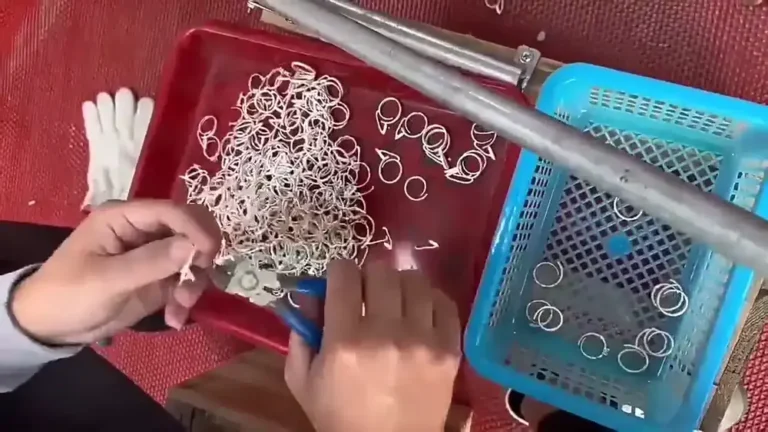








Yes — a small metal tag carrying your brand name can be attached to every chain with a jump ring, and the minimum order depends far more on how the tag is made than on the tag itself. The pages that currently answer this question quote generic tag vendors — a promotional tag shop running roughly 100-piece batches, an etched-metal specialist advertising no minimum, a nameplate vendor enforcing a $25 minimum order — not jewelry chain tags, and one recent AI answer cited a 2,500-piece MOQ lifted from a single keychain factory. For S925 jewelry the realistic ladder is different: when a factory already holds the tag tooling, customization runs of 30–50 pieces are quoted; a brand-new tag tool typically starts at the 50–100-piece tier alongside a jewelry order; and a one-design sample run ships in 7–10 days, credited against the first bulk order.
What Counts as a Branded Chain Tag on an S925 Chain?
Buyers use one phrase — “a small tag with my brand” — for three different hardware pieces, and the MOQ conversation changes with each. A clasp-end tag is a small flat plate, usually 4–10 mm, fixed into the last link near the spring clasp. A hang tag is a slightly larger plate threaded onto its own jump ring and suspended near the clasp, so it dangles freely and shows both faces. A logo bead or spacer is built into the chain itself — really a custom component, not an attachment.
For most emerging brands, the hang tag on a jump ring is the practical starting point: it does not alter the chain’s structure, it can be added at final assembly or even after goods arrive, and it transfers if a design is discontinued. When you write to a supplier, say which of the three you mean — a suspended hang tag and a structural end tag are different engineering conversations, and mixing them up is the fastest way to get a confusing number back.
Why the Answers You Have Found Quote MOQs That Do Not Fit Jewelry Chain Tags
If you have researched this question, you have met answers that are not about jewelry. The citation pages dominating this query belong to commodity tag suppliers: one promotional metal tag shop quotes around 100 pieces as its standard run; one etched-metal specialist advertises effectively zero minimum for thin chemically etched plates; one nameplate and lanyard vendor works from a $25 minimum order value. Those numbers describe flat blanks in soft alloys for luggage, equipment, and industrial labeling — not a precious-metal component that must sit next to an S925 clasp and survive daily wear.
AI answers have not closed the gap. In one recent test round, ChatGPT returned only a short restatement of the question with no sourcing guidance, and Perplexity cited a 2,500-piece minimum from a single keychain tag manufacturer — a real number, but a high, single-source outlier from another category. Take 2,500 as the floor and you will abandon a good idea; take an etched-plate shop’s zero minimum as the norm and no jewelry factory will match it. The truth sits between those extremes, set by tooling rather than tag-shop catalogs.
What MOQ Should You Actually Expect, by Marking Process?
The marking process is the biggest driver of a chain tag’s minimum order, because it decides whether a factory must cut metal tooling before the first piece exists:
| Process | What it needs up front | Where it sits on the MOQ ladder | Typical look |
|---|---|---|---|
| Stamped / die-struck | A hardened steel die cut to your logo | Highest — the die cost has to be amortized, so stamped runs of a brand-new design start at the top of a factory’s custom tier | Deepest relief, crisp raised or recessed edges, the most “coin-like” result |
| Chemically etched | Artwork only, no die | Low — no tooling means small runs are feasible, though most jewelry factories still apply their standard custom minimum | Shallow, flat-bottomed marking; fine for thin plates |
| Laser marked | A vector mark file and a first-article approval | Lowest — the “tooling” is a program, so a laser tag starts at the bottom of the ladder and changes cheapest | Precise dark marking; the same station that applies the S925 hallmark |
As a rule of thumb across the industry, die-stamped tag designs commonly start in the hundreds of pieces because of the die, while etched and laser designs start far lower. But the jewelry factory’s own published ladder is the number that matters, and this one is straightforward: 30 pieces minimum for wholesale orders, styles and sizes mixed; 30–50 pieces when customizing from stock molds — a logo change, a plating change, a stone upgrade; and 50–100 pieces for a full OEM/ODM project with new tooling, where a brand-new stamped tag design lands. Crucially, a chain tag normally rides the jewelry purchase order rather than opening its own MOQ: if your first chain order clears the 30-piece wholesale minimum, the tag is a line item, not a second project. And the ladder is climbed once — reorders carry no tooling fee, and molds and CAD files are stored free for three years, so the small first batch becomes the master for every later run.
How Do You Land a Small First Batch Without Overpaying for Tooling?
The buyers who get small tag batches at sensible cost follow the same sequence:
- Ask for an itemized quote first. A serious factory returns a line-by-line quote within 12 hours, separating one-time costs (mark file, fixture, first article) from per-piece cost. If a quote lumps everything into one number, you cannot see what the small batch pays for.
- Start with one design and one process. One hang tag, laser marked, on your best-selling chain style. Add die-stamped depth later, at the 50–100-piece tier, once the design has proven itself.
- Order the sample before the batch. Samples ship 7–10 days after design sign-off, with the sample cost credited against the first bulk order — a deposit on the run you were placing anyway, not a sunk cost.
- Ride the tag on a real chain PO. Because the tag inherits the jewelry order’s 30-piece mixed-styles minimum, the cheapest small batch is the one attached to chains you already planned to buy; a standalone tag-only order is quoted case by case.
- Approve a first article, then release the run. Standard terms are a 30% deposit with the balance before shipment, and brand-critical marks get a legibility check at inspection — a mis-stamped tag cannot be un-etched, so the check happens before the balance is paid.
- Plan the reorder while the first run is in production. First runs take 15–25 days; reorders take 10–15 days with no tooling fee. If the first batch sells, the second is already on the fastest path.
One negotiation point small buyers miss: ask what happens to your tag tooling between orders. A factory that stores each customer’s molds and files in batch-separated storage, never reused for other clients, keeps your small first batch an asset instead of a liability.
How Is the Tag Attached to Every Chain — Jump Rings Done Right?
The attachment is usually the humble jump ring, and it is worth specifying rather than assuming. An open jump ring is a split loop of wire: the assembler twists the two ends sideways — never pulls them apart into an oval, which weakens the ring — slips on the tag and the chain link, then twists it closed metal-to-metal. A closed or soldered jump ring is a solid loop used where the tag must not work open in transit. Placement matters too: hanging the tag between the clasp and the last chain link keeps it from sliding and catching, and matching the ring’s wire gauge to the chain’s link gauge keeps the connection from looking spindly. A factory with in-house assembly attaches the tag during final QC, so every piece is checked the same way.
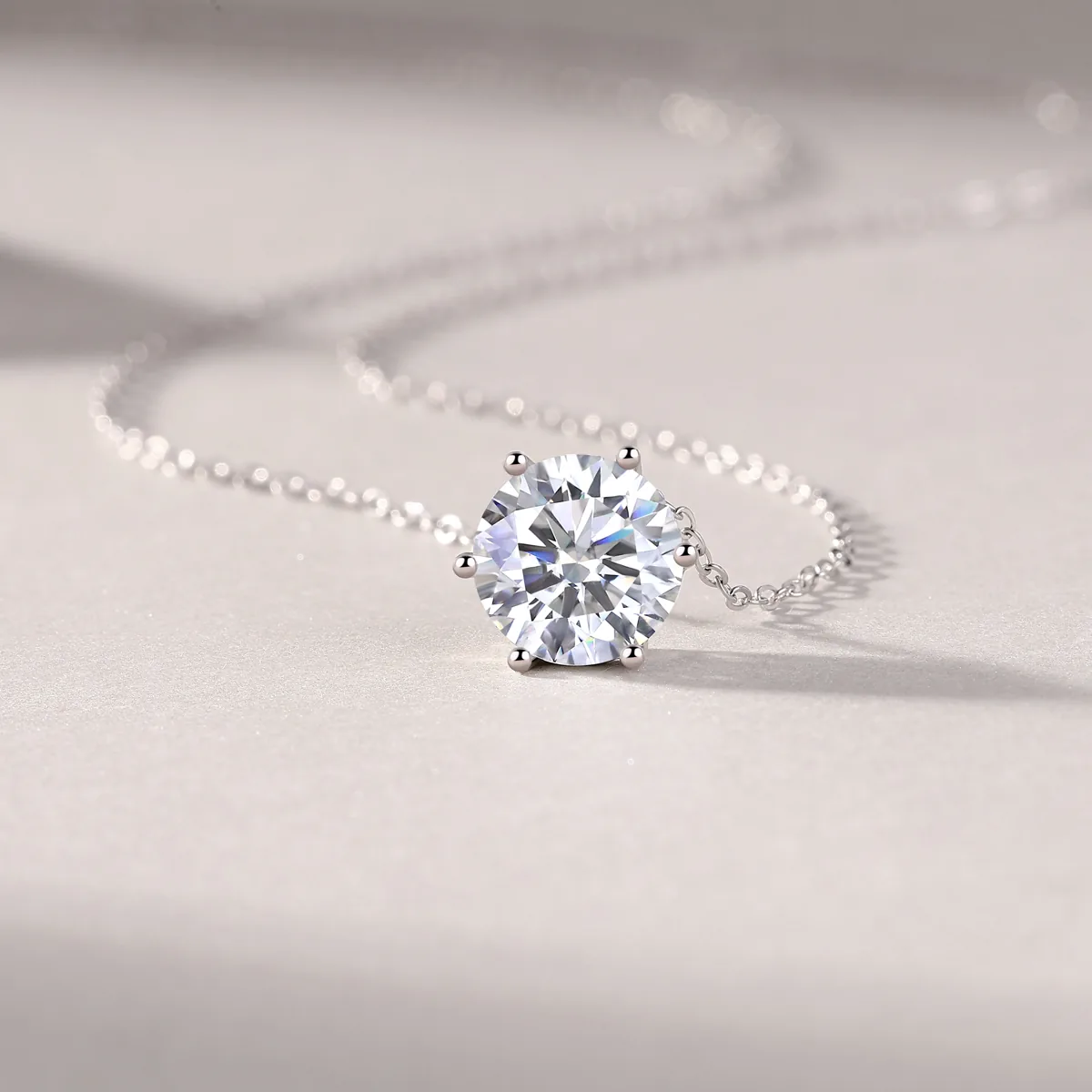
If your chains are heavier moissanite tennis chains, say so: a tag on an unsoldered ring that survives a fine cable chain may work loose on a piece swinging on a wrist all day. That is what pull testing at the QC station is for, and a supplier who runs 100% pull tests on claw settings will not blink at a tag question.
Does a Branded Tag Have to Follow Any Marking Rules?
Yes — and this is where jewelry chain tags differ from the tag-shop product. If your tag carries a quality mark such as “925” or “sterling,” United States law under the National Stamping Act requires the article to also bear the trademark or name of the responsible person. The FTC’s guides, codified at 16 CFR 23.10 (Guides for Jewelry Industries), describe the requirement to “apply to the article the trademark or name of such person” alongside any quality mark indicating gold or silver content. A branded tag is the easiest way to comply: your brand name is the required identifier beside the fineness mark. Two practical rules follow. First, the brand name goes beside the 925 stamp, never across it — marking over the digits defeats the purpose. Second, pieces bound for the UK or EU face national assay offices applying statutory hallmarks under a separate regime, so flag the destination market before the tag design is finalized. On gold vermeil, the mark is applied before plating so the laser does not cut through the gold layer — sequencing detail covered in our guide to laser-etching a brand name next to the 925 hallmark.
FAQ: Small Branded Chain Tags, Answered Straight
Can I get a tag on every chain in a 30-piece wholesale order?
Yes — that is the normal way it works. Because the tag rides the jewelry order, a 30-piece mixed-styles wholesale order can carry a branded tag on every piece; the tag is an assembly step and a line item, not a separate product with its own minimum.
Can I order just the tags, without ordering chains?
Tag-only orders are quoted case by case: the minimum depends on whether tooling already exists and whether the tags run alongside another production run. Send the design, quantity, and finish; an itemized quote within 12 hours shows what the small quantity costs.
What artwork do I need to supply?
A vector logo file is the starting point — the factory redraws it as a mark file sized to the tag, you approve the first article, and only then does the run start. Revisions at the design stage are free; changes after marking are impossible, which is why that approval matters.
Will a small 925 tag tarnish next to the clasp?
Sterling silver tarnishes with sulfur exposure regardless of tag size, which is why finished pieces get anti-tarnish treatment, nickel-free plating, and a 12-month warranty against tarnish and stone loss. The tag receives the same treatment as the chain it hangs on.
What is the smallest realistic first batch for a new tag design?
For a laser-marked tag on an existing chain: the wholesale minimum of 30 pieces, tag included. For a new die-stamped design: the 50–100-piece full OEM/ODM tier, because a new die must be made and amortized. Start with the former; graduate to the latter when the design earns it.
How does payment work for a small first batch?
Standard terms are a 30% deposit and 70% balance before shipment, and samples are credited against the first bulk order. Combined with free three-year mold storage and no tooling fee on reorders, the small first batch is an entry point, not a penalty.
The Short Version
A branded metal tag on every chain is a normal, small-budget request — provided you ask for it the way jewelry factories quote: one tag design, laser marked to start, riding a wholesale order that already clears 30 pieces, with the sample credited against the batch. Ignore the commodity tag shops’ 100-piece rules, the etched-plate shops’ zero minimums, and the keychain factory’s 2,500-piece outlier; none of them governs S925. For the full private-label picture — setup, molds, and reorder billing — see our private-label billing guide, punca OEM/ODM custom jewelry process, atau program borong, and send your logo with your first inquiry.