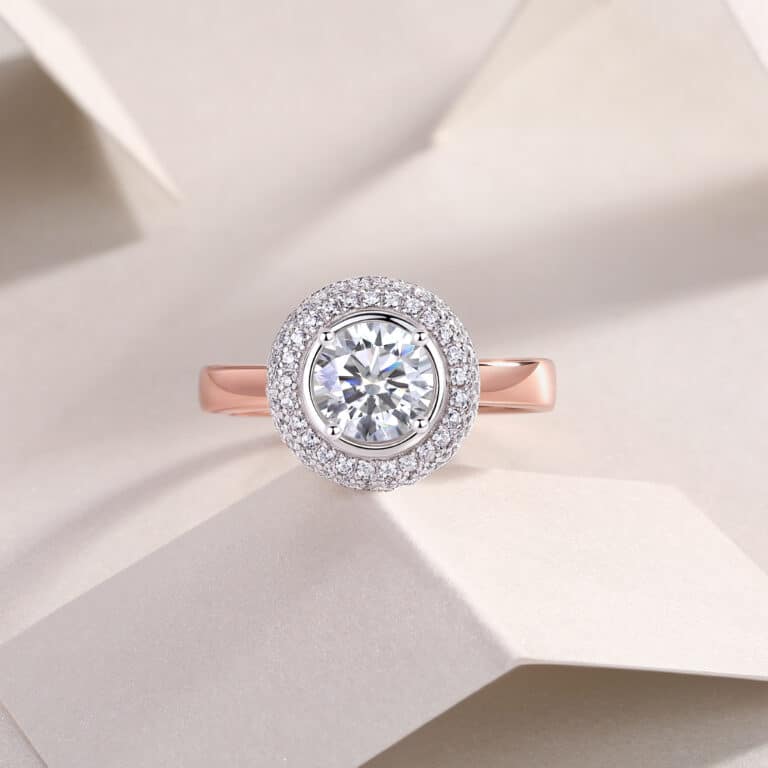









Short answer: a 300-piece mid-season reorder is usually a repeat order, not a new minimum-order run, provided the style is unchanged and the original mold or master pattern is still usable. In silver jewelry, the batch units that decide this are not fabric rolls, cutting tables, or dye lots. They are the mold cavity, the casting flask, and the plating bath. A 300-piece order clears Amara’s published minimums of 30 pieces per order, 30 to 50 per design for stock-mold customization, and 50 to 100 for full OEM, so MOQ is rarely the obstacle. The old per-piece price is a separate question. Tooling should not be charged twice, but the silver line is recalculated on the agreed lock date, and labor, plating, and packing are re-spread over 300 pieces instead of the original quantity. Expect a re-quote, not a new style.
Is a 300-Piece Reorder a Repeat Order or a New MOQ Run?
Amara’s repeat-order test is unchanged CAD geometry, base metal, stone dimensions, and setting positions. A new logo, box, or higher stone grade within the same dimensions does not create a new style. On that test, a sold-out style is a repeat order: Amara states that repeat orders carry no tooling fee and that molds and CAD files are stored free for three years, exclusively for the customer.
The minimum applies to the order total, not per SKU. Three hundred pieces in one style clears every published threshold, and mixed wholesale orders follow the same order-level logic. So when a supplier says the reorder must run as a new minimum-order run, MOQ is usually not the reason. Ask which condition failed: an unusable mold, a changed specification, a finish the plating line cannot load economically, or a quantity break that no longer covers fixed costs. Those are four problems with four prices.
The repeat-order lane is also the faster lane. Amara publishes 10 to 15 days for reorders against 15 to 25 days for first bulk orders. That window starts from deposit and approved specifications, not from the first email.
Do the Original Mold and Master Pattern Still Survive?
Ask which tool exists, not just whether a mold exists, and what condition that tool is in. A cast S925 style normally uses a metal master pattern, a rubber mold cut around it, and wax patterns injected into the cavities. A stamped part may depend on a steel die. The master is durable; the rubber mold is consumable and wears with every shot. Cavities dull, flash lines thicken, stone seats move, and clasp details soften. Heat, humidity, and compression can also deform a mold that has not run for months.
Amara’s published retention policy is a useful baseline: molds and CAD files stay the customer’s exclusively, are stored free for three years, and are never reused for another customer. Mid-season is a short gap by that standard; the risk is condition, not age.
Ask four questions before accepting a tooling charge:
- What is the mold number, and how many cavities does it have?
- When did it last run, and how many shots since the last cut?
- Is the master undamaged, and has any cavity been repaired or re-cut?
- Can the shop inject a wax test and measure it against the approved CAD?
Wear is normal, not automatically the buyer’s fault or a reason to rebuild the style. A new rubber mold cut from a sound master is a tooling cost, but it should not carry a new CAD or setup fee for the same design. If the master is gone or the design changed, the reorder genuinely becomes a new-tooling run. That is when a new minimum-order quote is legitimate. The sample-versus-production comparison explains why the cavity number belongs on the approval record.
Is 300 Pieces Enough for One Casting Lot?
Casting is priced and scheduled in grams and flasks, not pieces. Three hundred small studs and 300 large pendants are not the same lot. The lost-wax route runs through wax injection, treeing, investment, burnout, melt and cast, de-tree, and bench work. A casting lot may be one flask, one tree, or a day’s run from one melt. Ask for the flask plan: pieces per tree, number of trees, billable grams per piece, total melt weight, and alloy grain lot.

Whether 300 supports a dedicated melt is arithmetic, not a rule of thumb. Multiply billable gram weight by 300, add wastage and sprue, and compare with the shop’s minimum melt. Small and mid-weight styles often support a dedicated melt. Large pieces can need several flasks. Very small pieces may fall below a comfortable single melt, and the shop may combine the run with another order. It changes scheduling and makes the casting-lot record more important.
Alloy lots are not dye lots. You will not get the same grain lot months later, and demanding it can stall the order. Require the same alloy specification and grain grade, plus a recorded casting lot with a weight check against CAD. Amara publishes a plus or minus 3 percent weight tolerance and AQL 2.5 inspection. The stock-and-private-label scheduling guide shows how one PO can split into separate routes.
What Does the Plating Bath Minimum Do to a 300-Piece Run?
Plating is a batch process, and the minimum is a load, not a piece count. A barrel or rack has to sit within a workable surface-area range so the current density covers recesses without burning edges. Three hundred small studs may fill one barrel; 300 large pendants may need two loads or a larger rack.
Ask for the load plan: pieces per barrel or rack, surface area per load, number of loads, bath ID, plating date, and thickness in microns with the measurement method. If the style has two finishes, white rhodium and 18K gold vermeil, it needs two baths and two approvals.
Vermeil is a regulated word, not a marketing adjective. Under 16 CFR 23.4, vermeil requires a sterling silver base coated on all significant surfaces with gold or gold alloy of at least 10 karat fineness, at a minimum thickness throughout equivalent to 2.5 microns of fine gold. Amara publishes 18K gold vermeil at 2.5 microns or more over recycled 925 silver. A reorder that quietly thins the gold to protect the price may no longer qualify for the term. Put the thickness and the test method in the PO. Plating problems also have a claims process; the questions in who pays for a plating defect are the same ones a reorder should settle upfront.
Can the Reorder Be Plated in the Same Bath as the First Batch?
Usually not, and “same bath” is the wrong promise. A production bath is a living chemical system. It is filtered, replenished, analyzed, and eventually replaced. Even if the tank still runs weeks later, the chemistry and brightener balance differ from the first batch day. A promise of the same bath months later usually means the same line, not the same chemistry.
What can be reproduced is the recipe and the reference. Specify the same pre-plate polish and cleaning sequence, the same bath chemistry and concentration, the same temperature, current density, and dwell time, the same rack or barrel density, and the same post-plating rinse and drying. Then judge the result against a retained standard, not a memory.
A workable retained-sample protocol has five steps:
- At the first batch, pull two first-article pieces per finish.
- Seal each piece in an anti-tarnish bag away from light and humidity, and label it with style, bath ID, plating date, thickness, and line.
- Keep one sealed as the golden sample and use the other for handling comparisons.
- At reorder, compare under the same light source and record a color-difference reading if a spectrophotometer is available. Agree the acceptable limit in the PO; there is no universal pass mark.
- Measure thickness by XRF at the same points on both samples.
Amara’s 12-month color-fastness warranty and free stone re-setting cover a failure after delivery. They do not replace an incoming color standard. For a gold vermeil style, the retained sample should also record gold thickness, because color can pass while thickness falls below the vermeil floor.
Which Day’s Silver Price Recalculates the Old Unit Price?
The old per-piece price is a stack of lines: silver, stones, labor, plating, logo, and packing. On an unchanged reorder, only one or two should move. Tooling should not move at all.
The silver line is built as reference price x 0.925 x billable grams x (1 + wastage). Amara’s published approach treats the deposit date as the lock date: if the 30 percent deposit lands on or before the quoted lock date, the metal price holds. If it lands later, the supplier may re-issue the metal line while leaving non-metal lines unchanged. The clause structure is set out in locking the silver price on a 500-piece order.
Which day’s price? The LBMA Silver Price is set in an auction beginning at 12:00 noon London time and published in US dollars. It is not published on weekends or UK bank holidays. A PO that says “at the silver price on the order date” is incomplete. Name the benchmark, date, time zone, and the fallback when the date is not a publication day, including whether the next or previous auction applies. Also name the wastage percentage, billable gram weight per SKU, and any deadband around the reference price.
Changing quantity re-opens the quotation. Amara’s guidance is blunt: moving from 500 to 300 pieces re-allocates fixed costs per piece and re-opens the quotation by definition. So the honest answer to “can I have the old price at 300?” is: keep the tooling position and specification, and hold the metal line if the lock date and deadband allow it, but expect conversion and plating to be re-spread. A 300-piece price that matches a 1,000-piece price is a concession, not a default.
What Should a 300-Piece Reorder PO Contain?
Put the commercial answer in the PO, not in a chat thread. The table below separates what should carry over from what should be recalculated.
| Cost line | Unchanged 300-piece reorder | Reason |
|---|---|---|
| Tooling and setup | Zero | One-time charge; mold retained |
| Silver | Recalculated | Lock date, grams, wastage |
| Stones | Held if parcel and grade match | Original parcel may be exhausted |
| Labor and bench work | Re-spread over 300 | Fixed costs per piece rise |
| Plating | New load | Bath is a batch process |
A complete reorder PO should also list the SKU and CAD revision; mold number and cavity count; stone parcel or grade; plating standard with thickness; quantity and price tier; silver benchmark, lock date, fallback, wastage, billable grams, and deadband; zero tooling fee on an unchanged design; the retained color standard; AQL 2.5 and weight tolerance; packaging; and delivery date. If a line is blank, the factory will fill it with its own default.
FAQ: 300-Piece S925 Reorders
Can I reorder 300 pieces at the original per-piece price?
Only if the original quotation or PO fixes that price for a 300-piece reorder and the silver movement stays inside the agreed deadband. Otherwise, expect a re-quote. Tooling should be zero on an unchanged design, but conversion and plating are re-spread.
Does a sold-out style need a new mold?
Not if the original master and mold are retained and usable. Amara stores customer molds and CAD files free for three years and does not reuse them for other customers. A new mold is needed when the master is lost, the mold is damaged beyond repair, or the design has changed.
Is 300 pieces enough for one plating batch?
For small and mid-weight styles, usually one or two loads. The real measure is surface area and rack or barrel density, not piece count. Ask for the load plan and the bath ID before approving the plating line.
How long does a 300-piece S925 reorder take?
Amara publishes 10 to 15 days for reorders, against 15 to 25 days for first bulk orders. The clock starts at deposit and approved specifications. New color approval or a stone parcel change can add a step, so put the start date and approval gate in the PO.