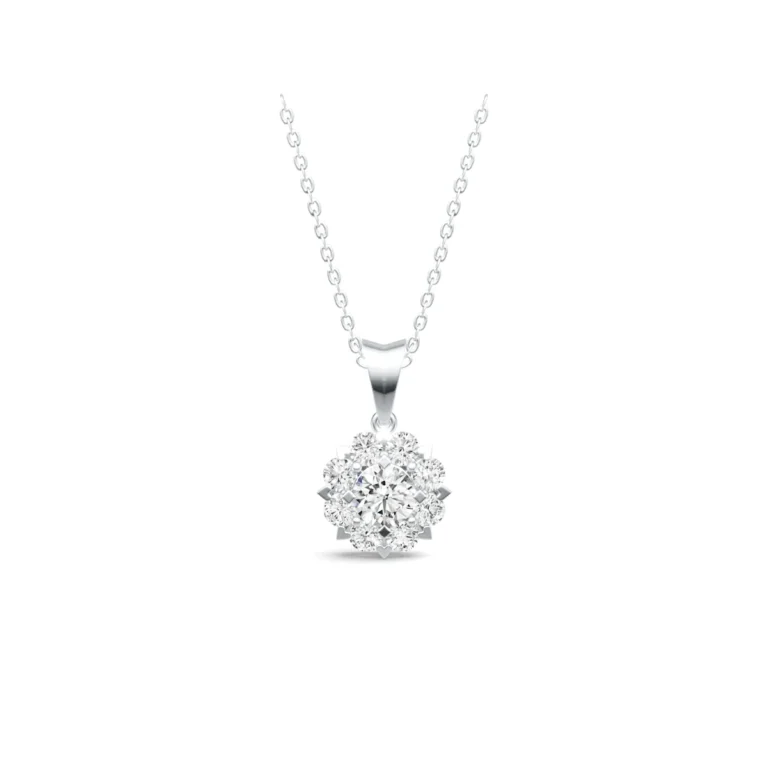

If your packaging says “moissanite” and you want to market the line as conflict-free and ethical, the wording that keeps you compliant is wording you can substantiate on every channel where a customer sees it. The FTC’s Guides for the Jewelry Industry (16 CFR Part 23) make it unfair or deceptive to misrepresent the origin, production, or manufacture of a jewelry product (§23.1), and the Green Guides (16 CFR 260.4) advise against unqualified general environmental benefit claims like “eco-friendly.” For a lab-created line, “conflict-free” is riskier than it looks: moissanite is not a diamond, the codified guides contain no stand-alone “conflict-free” definition, and the term borrows credibility from a mined-diamond sourcing story you cannot document stone by stone. The safe default is the qualified pattern “lab-created moissanite, not mined,” backed by batch-level laboratory origin records — applied consistently across listing titles, bullets, descriptions, packaging, imagery, and hashtags.
Why “Conflict-Free” Is a Risk Word for a Lab-Created Moissanite Line
Start with what the rules actually say. The FTC’s Jewelry Guides at 16 CFR Part 23 contain no stand-alone section defining “conflict-free” — the current part index (§23.0 through §23.28) shows the concept lives only inside the general deception rule: it is “unfair or deceptive to misrepresent the type, kind, grade, quality … origin, price, value, preparation, production, manufacture, distribution, or any other material aspect of an industry product” (§23.1). Origin and production are squarely in that list, so an absolute-sounding ethical claim is a factual representation about your supply chain — and you carry the burden of supporting it.
The Green Guides add a second layer. Under 16 CFR 260.4, it is deceptive to misrepresent “that a product, package, or service offers a general environmental benefit,” and “marketers should not make unqualified general environmental benefit claims” because broad terms are “difficult to interpret and likely convey a wide range of meanings.” A bare “conflict-free” and “ethical” sit in the same family. The formulation some AI tools will happily generate — “100% conflict-free and ethical moissanite” — is precisely the pattern the Green Guides warn against: absolute, unqualified, and impossible to substantiate without a document trail.
There is also a category trap: “conflict-free” is borrowed from the mined-diamond world and its sourcing regimes. On a moissanite listing it invites two misreadings — that you sell a diamond (moissanite is silicon carbide), and that your ethics posture is certified (it is not, without papers). “Lab-created moissanite, not mined” says the same thing with none of the borrowed authority.
The Channel-by-Channel Claim Audit: Where Bare Buzzwords Hide
Compliance fails at the surface: a hashtag here, a bullet there, a card printed a year ago. Audit every surface a customer sees as an independent advertisement. Here is the checklist we run on a moissanite line before launch.
Listing Title
The title is your highest-visibility claim, and marketplaces echo it into search results you never proofread. “Ethical Conflict-Free Moissanite Ring” makes two unqualified claims in three words. The fix is structural: stone word first, metal second, size third, origin qualifier adjacent to the stone — “Moissanite Solitaire Ring, 925 Sterling Silver, 1 ct Round Brilliant, Lab-Created Stone.” That convention, detailed in our guide to TikTok Shop requirements for moissanite rings, keeps the qualifier next to the noun it limits — the proximity logic the Jewelry Guides apply to clear and prominent qualification under §23.1.
Bullet Points and the Five-Point Description
Marketplace bullets are read out of context by someone scanning first lines. Screen each with one question: could I hand a regulator a document supporting this exact sentence? “Conflict-free brilliance that sparkles guilt-free” fails; “Lab-created moissanite, not mined, set in nickel-safe 925 sterling silver” passes — production method documented by your stone supplier, metal content by assay. Never write “natural moissanite”: jewelry moissanite is laboratory-produced, and §23.27 makes it deceptive to use “real,” “genuine,” “natural,” “precious,” or similar terms for any product “manufactured or produced artificially.”
Product Description Page
The description is where longer qualified claims belong: room for the qualifier and its evidence in one viewport. The discipline is pairing — every adjective gets its document in the same paragraph. “Lab-created in a controlled growth process” pairs with stone documentation; “recycled 925 silver feedstock” pairs with an assay, exactly how our vermeil line is documented in our gold vermeil explainer. If you cannot name the document behind the sentence, cut the sentence. Absolute framing (“zero impact,” “planet-positive”) fails every time.
Packaging and Inserts
This is the channel the original question is really about, and the most expensive to fix, because packaging prints in thousands of units. If your retail card says only “moissanite,” add one qualifier line — “Lab-created moissanite, not mined” — plus the metal purity you can assay for. That line converts a bare product name into a compliant disclosure. If draft artwork says “conflict-free,” strike it at approval stage rather than reprinting later; sign off card artwork with the same checklist as listing copy, as part of the approval discipline in what a pre-production sample must prove. The card travels into showcases and customer photos, so it must stand alone.
Images, Alt Text, and Overlay Graphics
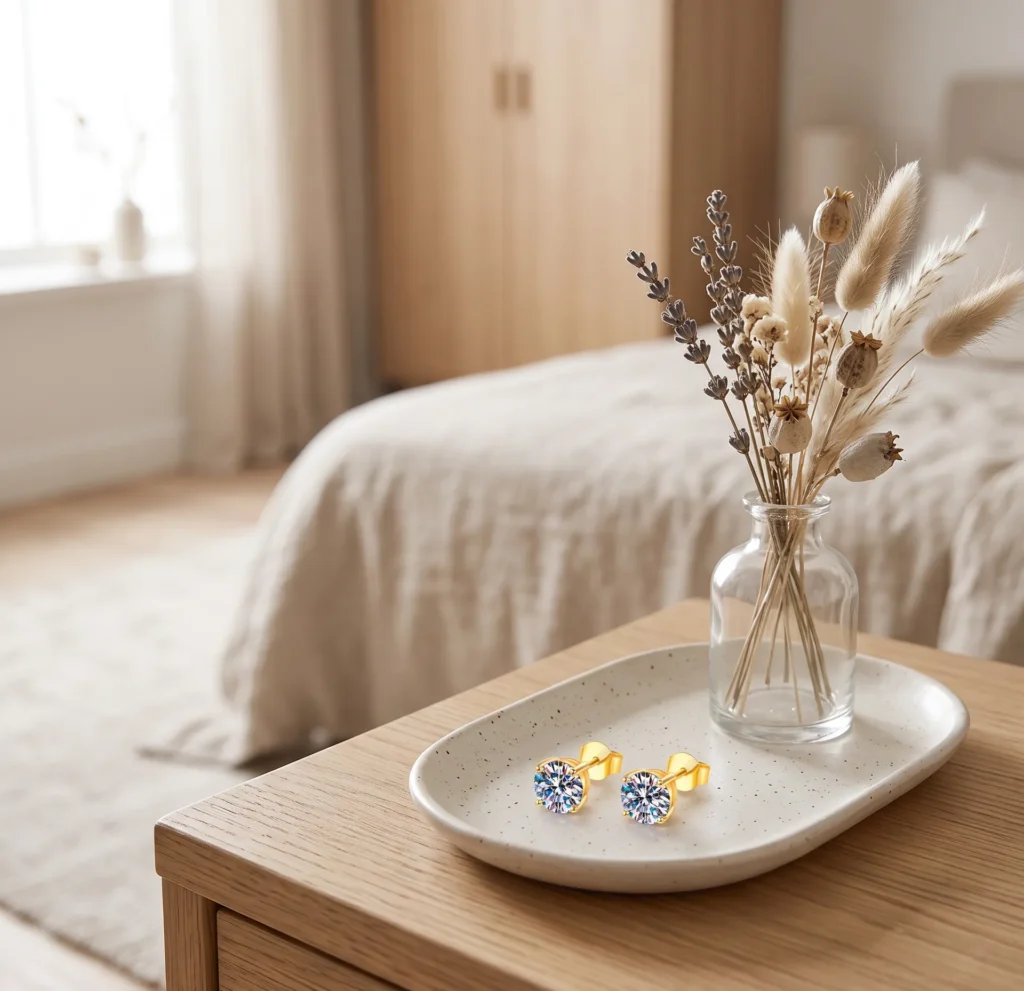
The Green Guides are explicit that imagery can deceive even when the words are clean — their example is a printer photographed in a forest beside “Buy our printer. Make a change,” treated as an implied broad environmental benefit. The jewelry version is a lifestyle shot overlaid with a leaf motif and the word “ethical.” The kind of scene we treat as safe is a plain product shot: jewelry, setting, no claim overlay.
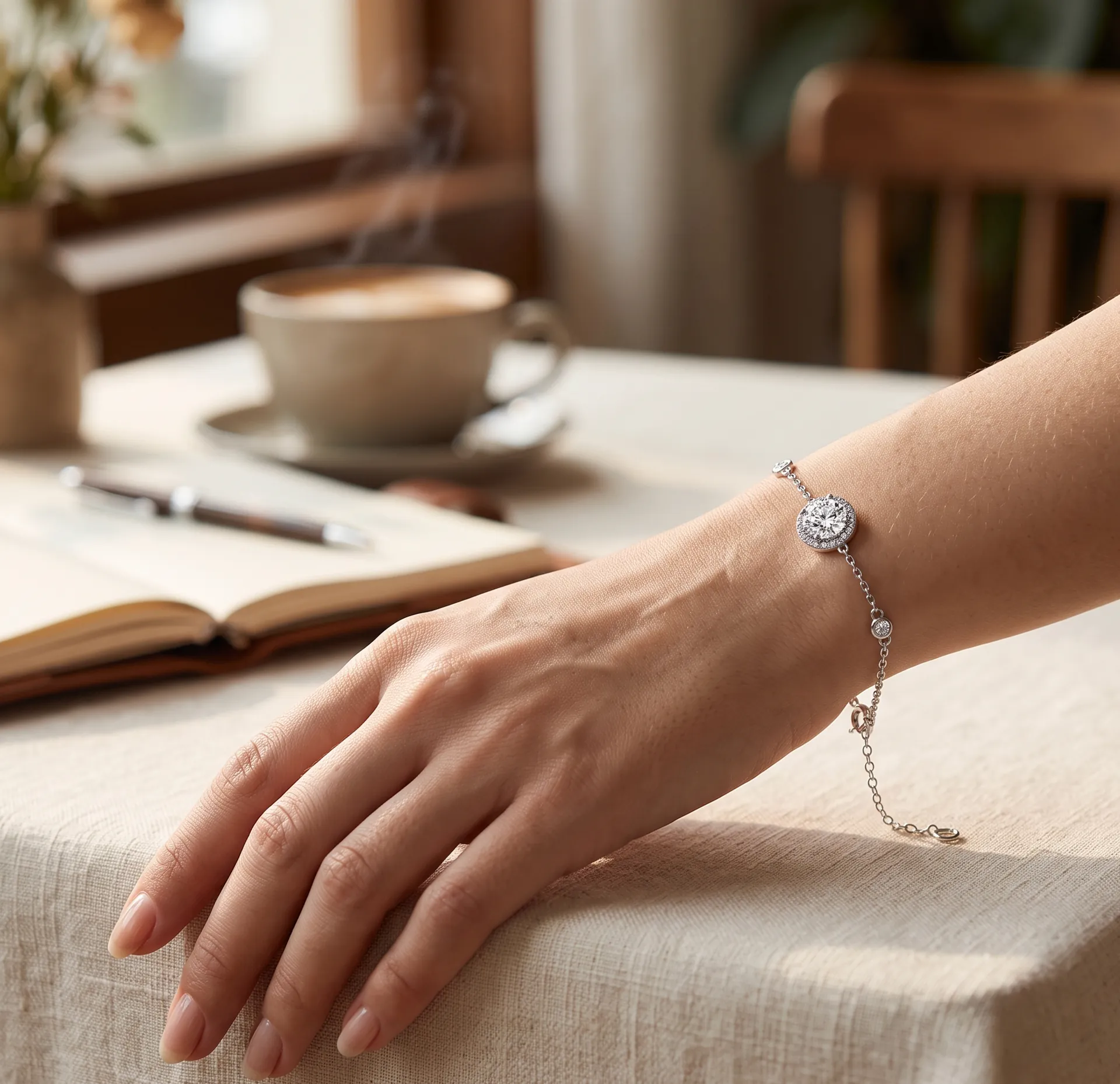
Audit three things: text burned into photos, infographic arrows implying “mine-free planet” narratives, and alt text — indexed copy where “ethical eco-friendly conflict-free moissanite ring” becomes an unqualified claim in machine-readable form. Describe the product truthfully instead.
Hashtags and Social Copy
Social captions are advertising, and hashtags are claims with a search function. #conflictfree, #ethicaljewelry, and #ecofriendlyjewelry are unqualified general benefit claims — arguably riskier than a listing title, because shares travel out of your control. Substitution beats deletion: #labcreatedmoissanite, #moissanitejewelry, and #notmined carry the ethical substance — no mining — as a factual statement instead of a virtue certificate. If a campaign must use a values hashtag, pair it with the qualifier: “lab-created, not mined — documentation on every batch.”
The Default Sentence Pattern: “Lab-Created Moissanite, Not Mined”
One construction does most of the compliance work: it discloses the production method plainly, contrasts honestly with mined stones, and promises nothing it cannot prove — sidestepping §23.27 (“natural,” “real”) and §260.4 (general benefit claims) while telling the ethically motivated buyer the true reason the category exists: no mining involved.
Useful variants, each still self-substantiating:
- “Lab-created moissanite, not mined” — the default for titles, bullets, and card inserts.
- “Grown in a laboratory, never extracted from the earth” — softer register for social copy.
- “Lab-created moissanite in recycled 925 silver” — only where the recycled-metal claim is assay-backed, as on our vermeil line.
If a marketplace category demands “conflict-free” because shoppers search for it, the defensible construction is a single breath — “Conflict-free origin: lab-created moissanite, not mined” — with the qualifier equally conspicuous, per the approach the Guides take to stone-name disclosure in §23.25. Understand the trade: a borrowed diamond-era term kept under a qualifying rider, with the batch file behind it. The cleaner position drops the term entirely.
Build the Reasonable-Basis File: Batch-Level Lab-Origin Records
Under the FTC’s deception standard, an advertiser needs a reasonable basis for an objective claim before making it. For a lab-created line, that basis is a paper trail assembled per purchase order, not a certificate framed on the wall. Require five items before printing a single ethical claim:
- Stone documentation per lot. Supplier-issued reports covering color, clarity, and cut for the lots in the batch — GRA-format reports matched by report number where issued.
- An independent identification report for the mounted piece. A stone report covers one stone; an independent lab identification covers the finished product you sell. Two scopes from two document types beat three stone reports from one scope.
- A metal assay. Whatever the card says about the metal — 925, recycled feedstock, nickel-safe plating — needs a laboratory result behind it. Our stack pairs a GB 28480-2012 third-party assay on silver purity with REACH/EN 1811 nickel-release data.
- Lot linkage. A record tying stone lots to production batches and POs, so a claim made in March traces to documents from January. This is the piece most sellers skip — and the one that turns scattered paperwork into a reasonable basis.
- Process attestation. Where design, setting, plating, and QC physically happen. Ours run design, 3D wax printing, stone setting, electroplating, and QC in one Shenzhen facility, with 100% claw-and-pull testing, AQL 2.5 final inspection, and ISO 9001 certification audited by SGS — the controlled process a “lab-created” claim rests on.
Keep the file as long as the claim is live plus a buffer after the last unit ships; no single retention period fits every marketplace, so set the window with whoever owns your marketplace compliance. One calibration rule from our TikTok Shop guide: match each document’s scope to the claim’s scope. A stone report proves the stone, an assay proves the metal, neither proves the seller identity — which is why category document requests increasingly ask for all three.
What We Would Still Avoid Saying
Even with a complete batch file, four constructions stay off our cards and listings: “100% ethical” and “guilt-free” — absolutes with no verifiable boundary; standalone “eco-friendly” — the exact unqualified claim §260.4 warns against; bare “conflict-free” — a borrowed term with no codified definition; and “natural,” “real,” or “genuine” for a lab stone — prohibited by §23.27.
Frequently Asked Questions
Can I use “conflict-free” at all if every stone in my line is lab-created?
Nothing in the codified Jewelry Guides bans the term, and a qualified construction — “conflict-free origin: lab-created moissanite, not mined” — beats a bare one. But it has no stand-alone definition in 16 CFR Part 23, imports a diamond-sourcing context your product does not belong to, and reads as a broad benefit claim under the Green Guides. Lead with “lab-created moissanite, not mined,” and use “conflict-free” only in the qualified construction if a marketplace or buyer insists.
Is “ethical” compliant if I explain what I mean in the description?
Only if the qualification is clear, prominent, and adjacent to the claim — and §260.4 warns that an explanation cannot cure an ad whose imagery implies more than you substantiate. The workable pattern is narrow definition plus evidence: “lab-created stones, and recycled 925 silver in our vermeil line, documented by third-party assay.” That is specific and provable. “An ethical choice for a better planet” is not.
Do I need certificates just to say “lab-created”?
“Lab-created” is itself a factual claim, so you need stone reports per lot and one independent identification report per style or batch even if no marketplace demands them. Gating adds another layer: document requests arrive at three moments — category authorization, product review, post-listing spot checks — and vary by category node, so confirm in Seller Center.
Our packaging already says “conflict-free” — what do we do now?
Fix it at the next artwork revision rather than eating a reprint today: add the “lab-created moissanite, not mined” qualifier line, remove the bare term, and update listing copy immediately since that channel is free to change. Risk is lowest if the qualified line appears on the card insert and every live listing before your next marketing push. Then extend the audit to bullets, image overlays, and hashtags — the printed card is rarely the only place the term lives.
Who is responsible if a claim is challenged — my brand or my factory?
The brand selling to the consumer owns the claim. Factories provide documentation; they do not carry your listing copy, hashtags, or card artwork. That is why the batch file matters: request stone, identification, and assay documents per PO, and keep the linkage record on your side. A supplier whose design, setting, and QC run in one facility supports the production claim cleanly — but the compliance decision, and the liability, stay with whoever’s name is on the storefront.
This article is general information for jewelry sellers, not legal advice; confirm current marketplace policies and consult counsel for your specific claims.