








Yes — at the factory level, a moissanite that falls out of its setting within the warranty term is normally re-set free, provided the loss traces back to workmanship rather than damage. Amara Jeweiry, an S925 silver moissanite jewelry manufacturer in Shenzhen since 2010, publishes this as a 12-month warranty covering plating color-fastness under normal wear plus free re-setting for non-artificial stone loss, assessed from photographs first with a 48-hour response. What voids the coverage is not the months of wear but what the evidence shows afterward: prongs bent by impact, a third-party repair made before the factory could inspect the piece, cleaning that strips plating, or a claim filed without the photo and video record needed to match the factory’s 40x setting records. Below: coverage, cost sharing, exclusions and the contract wording to insist on.
What does a factory warranty on S925 moissanite jewelry actually cover?
A factory warranty in B2B jewelry runs from the manufacturer to the wholesale buyer — importer, brand or retail chain — not to the end consumer, and its published wording is the reference point when a claim is argued months later. Amara’s wholesale program page and FAQ state the same scope: “Plating color-fastness under normal wear, and free re-setting for non-artificial stone loss,” with resolution “by replacement, re-setting or credit — decided in your favor for any confirmed defect.”
Three structural points follow. The warranty has two distinct objects: the plating, time-boxed at 12 months under normal wear, and the setting, covered for stone retention. “Non-artificial” is the load-bearing word — it separates a stone that left a defective seat from one that left after the ring was bent or pried. And production structure determines accountability: design, 3D wax printing, setting, electroplating and quality control all finish in the same Shenzhen facility, so a fallen stone has no subcontractor to blame.
The quality baseline matters when a claim arrives: every piece is pull-tested — 100% of pieces, not samples — before it leaves the factory, claw checks run at 100%, micro-pavé is set under 40x magnification, and final inspection applies AQL 2.5. As for the stone, GIA’s gemology literature notes its hardness is “second only to diamond” — which is why a fallen stone is almost always a setting event, not a stone failure, and why the claim conversation belongs on the seat and the prongs.
How does the factory decide a stone loss is workmanship, not wear?
The decisive physical evidence is the condition of the empty seat, which factories read the way an investigator reads a vehicle.
- Prongs intact, seat empty. Tips unbroken and in position but the stone gone — a retention failure: seat cut slightly wide, insufficient burnish, metal below spec. The classic covered case, the one “non-artificial stone loss” is written for.
- Prongs bent or flattened, shank deformed. The ring was caught, pulled or crushed and force opened the setting. That is mechanical damage, not workmanship, however recent the purchase.
- Girdle chipped under intact prongs. A chip beneath an undeformed prong points to force applied during setting — why Amara’s claims guidance lists “moissanite girdle chips under intact prongs” among factory-side defects worth claiming.
- Several melee stones missing from one pavé line. One lost melee can be luck; a run of failures in a single line suggests a batch issue and gets assessed batch-wide.
“Normal wear” is the other half of the test, and it is narrow: micro-scratches on plating, slight rounding of prong tips, softening of polish after months on a hand — none of that voids anything, because color-fastness coverage is explicitly defined under normal wear. What factories screen out is damage dressed as wear: a prong snapped in half, scrape marks across the gallery, a seat carrying pry marks. Those read as events, not wear.
Verification runs against records: Amara’s guidance describes matching 40x setting records to claim photos, and because stones are GRA-certified with laser-inscribed girdles, the factory can confirm whether a returned stone is the original. The golden sample closes the loop.
Who pays for the re-setting, the replacement stone, and the freight?
When a defect is confirmed, the remedy is simple: the re-set is free, the replacement stone is free, and the buyer picks among replacement, re-setting or credit — with a 48-hour response committed in the FAQ. The variables to pin down in writing are freight and volume.
- Confirmed defect, single piece. The factory re-sets or replaces it; because one small parcel is disproportionate to courier, most factories absorb the return into your next order or issue a credit. Ask which applies and write it down.
- Confirmed defect, batch. A repeated failure across a batch is a production issue, not a service case: replacement pieces go into the next run, and batch acceptance under AQL 2.5 happens before packing — the contractual anchor.
- Ambiguous evidence. Where prong condition leaves the cause genuinely uncertain, the common settlement is a split — the factory re-sets free, the buyer covers the courier, or the difference nets as credit. Negotiate that clause while things are calm, not during a claim.
- Excluded cases. Impact damage, third-party repair, term expiry — the stone can still be re-set, but as a paid service quoted per case rather than a warranty remedy.
Buyers reselling retail should note: a written warranty passed through to consumers is governed by US federal rules — the FTC’s Businessperson’s Guide to Federal Warranty Law requires coverage in a single, clear document designated “full” or “limited.” Your factory agreement should give you terms you can mirror downstream.
What actually voids the warranty at factory level?
The void conditions that matter to a factory are narrower than the frightening lists on retail warranty cards. Five triggers do almost all the work:
- Third-party intervention before inspection. If a local jeweler re-tips, re-burnishes or glues the stone before the factory assesses the piece, the evidence is destroyed and the claim unprovable. Photo-first assessment, with physical return “requested only where needed,” only works if the piece stays untouched until then.
- Mechanical damage. Bent prongs, a snapped shank, a gallery crushed in a door, a chain snagged and yanked — the warranty covers how the setting was made, not what happened to it afterward.
- Care that contradicts normal wear. Chlorine, abrasive pastes, ultrasonic or steam cleaning on plated pieces, toothpaste scrubbing — all strip plating far faster than wear curves predict. Plating worn through by abrasion is a care issue, not a color-fastness defect.
- Claims outside the term. The published clock runs from delivery, not shipment — Amara’s FAQ wording is “free re-setting for non-artificial stone loss within 12 months of delivery”; a claim arriving in month 14 is a paid service, however sympathetic the story.
- Evidence gaps. No unboxing video, no PO-tag photos, filtered or beautified images. Amara’s guidance is blunt: “a smoothed photo is a rejected photo.” A claim the factory cannot match to its records is not one it can honor.
Notice what is not on the list: ordinary months of wear. A ring worn daily for six months that loses a stone with intact prongs sits squarely inside the coverage — “non-artificial” exists precisely so normal use cannot become an excuse.
What evidence should a wholesale buyer collect when a stone falls out?
Evidence decides wholesale claims — the factory can only compare against what you send. Amara’s arrival-damage claims guide applies equally to stone loss: a full-frame photo with a metric ruler, a macro close-up of the empty seat, raking light to expose prong tips, an identity shot with the SKU/PO tag, one batch photo of affected pieces — plus an unboxing video in one continuous take, because “a cut is the moment a carrier’s surveyor stops believing the footage.”
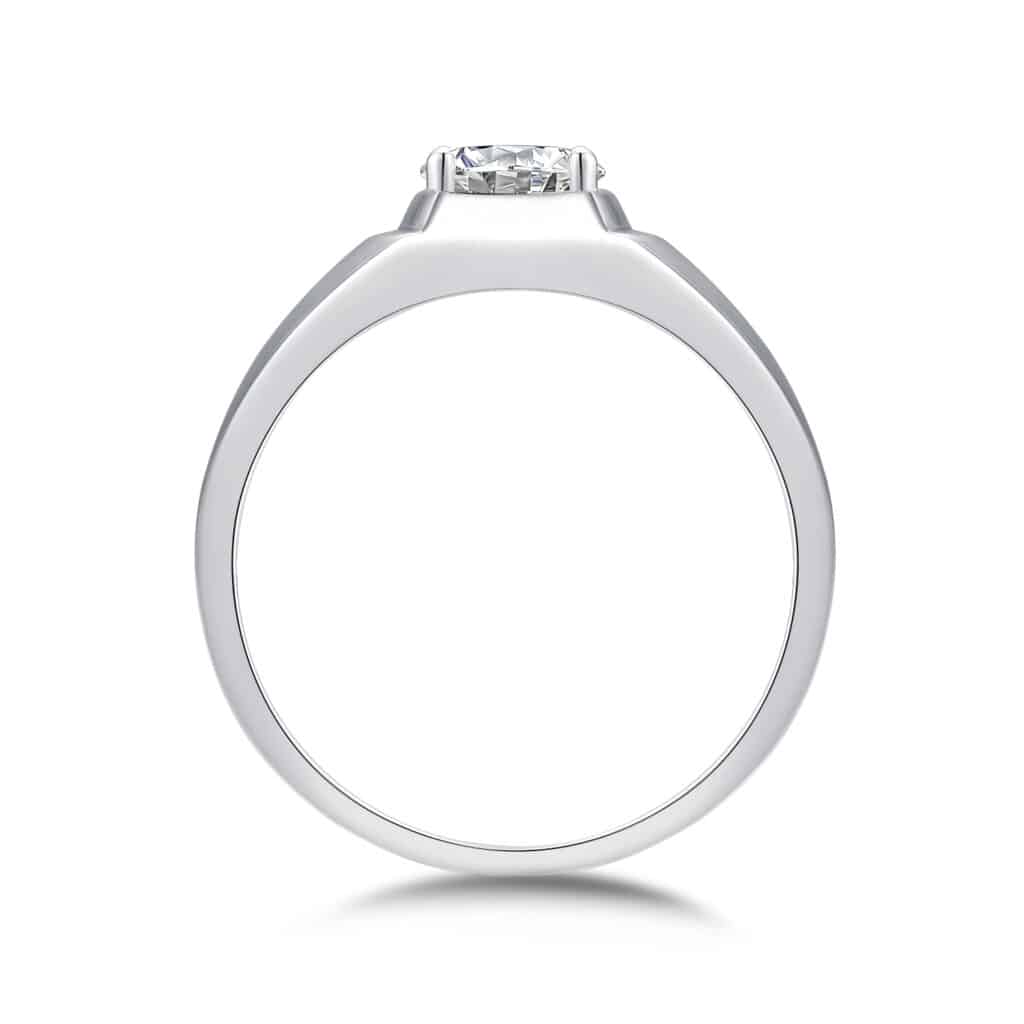
Two records should already exist. The first is the pre-shipment batch video — in Amara’s words, “the video is a deliverable, not a courtesy” — which locks in the batch’s condition before it left Shenzhen, as covered in our guide to batch videos before balance payment. The second is close-up footage of the finished piece, because prong geometry is the whole case. The video below shows ring R13572 rotating through every angle — prong tips, halo pavé line and filigree gallery under the head — the level of detail an assessor compares a worn piece against.
File each claim as one email: a searchable subject with the PO number, a summary table of affected pieces, packaging evidence first for transit damage, per-defect photo sets, and a concrete remedy request — re-set, replacement or credit. That is the structure Amara’s claims guide recommends, and it keeps the 48-hour assessment window short.
What wording should go into the purchase contract?
Whatever a factory’s website promises, the enforceable version is the clause in your PO or master agreement. For OEM projects — where the factory builds from your CAD and stores the tooling free for three years — it matters even more. A workable structure, aligned with Amara’s published terms:
- Scope. “The Supplier warrants each piece against setting-workmanship defects, including stone loss with prongs intact, and against plating color-failure under normal wear, for twelve (12) months from the bill-of-lading date.”
- Remedy. “For confirmed defects, the Supplier shall, at the Buyer’s election, re-set the stone, replace the piece including the replacement stone, or issue a credit, free of charge.”
- Assessment. “Buyer shall notify Supplier within [X] days of discovery with photographs per the agreed evidence standard and the unboxing video where available. Assessment shall be by photographs first; physical return shall be requested only where necessary, and the piece shall not be repaired or altered before assessment.”
- Exclusions. “This warranty does not cover damage from impact, bending or snagging; alteration or repair by any party other than the Supplier; abrasion or chemical exposure inconsistent with normal wear; or claims made after the warranty term.”
- Costs and freight. “For confirmed defects the Supplier bears re-setting and replacement costs; return freight for confirmed defective batches shall be [borne by the Supplier / settled as a credit against the next order]. Out-of-term or excluded re-setting shall be quoted per case.”
Keep the brackets until you have the factory’s written answer — freight split and notice window are the two terms every factory prices differently. The published terms give you the anchor: 12 months, photo-first assessment, free re-setting for non-artificial loss, 48-hour response. A supplier who hesitates to put those four commitments in a contract is telling you something — see our OEM and ODM program for the surrounding commercial terms.
FAQ
Does months of normal wear alone void the re-setting warranty?
No. Normal wear is what the warranty is written around — the color-fastness coverage is explicitly under normal wear, and a stone lost with prongs intact after months on the hand is the textbook non-artificial case. Voids come from events and evidence: impact, third-party repair, abusive care, expiry, no record to match.
Do I have to ship the whole batch back for one missing stone?
No. Assessment starts from photographs, with physical inspection requested only where needed; empty-seat photos against the pre-shipment batch video usually classify the claim, and batch-wide replacement, when warranted, is handled in the next production run.
Is a chipped or cracked moissanite covered?
Depends on the chip’s position and the prong condition. Moissanite is nearly as hard as diamond and does not chip in normal wear — a chip requires force. A girdle chip beneath intact, undeformed prongs is flagged in Amara’s claims guidance as a factory-side defect; a chip alongside bent prongs reads as impact and is excluded.
What happens after the 12-month term?
Warranty coverage ends; the service relationship does not. Re-setting after term is a paid service quoted per case, and because molds and CAD files are stored free for three years, the factory still holds the original setting’s specification — which makes an accurate post-warranty re-set possible.
Does the factory warranty cover my retail customers directly?
No — it runs to you, the wholesale buyer, and you choose what to extend downstream. If you put a written warranty in your retail boxes, consumer warranties are regulated differently: in the US the FTC requires single-document disclosure and “full” or “limited” designation. Draft your consumer card so its promises never exceed what your factory agreement delivers.