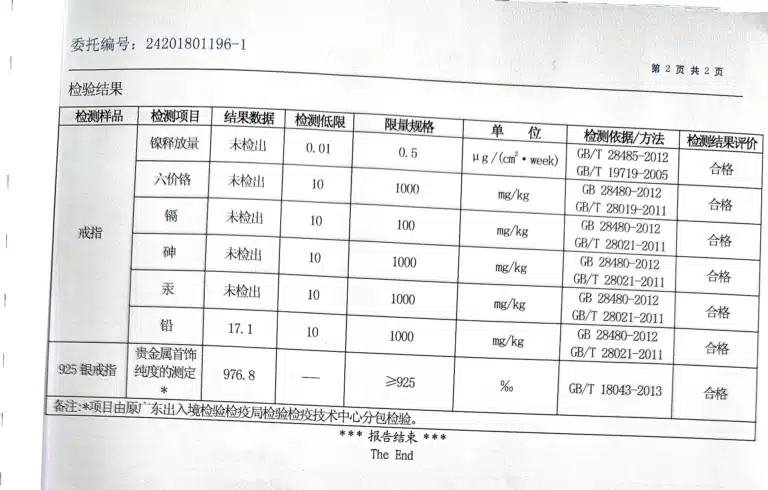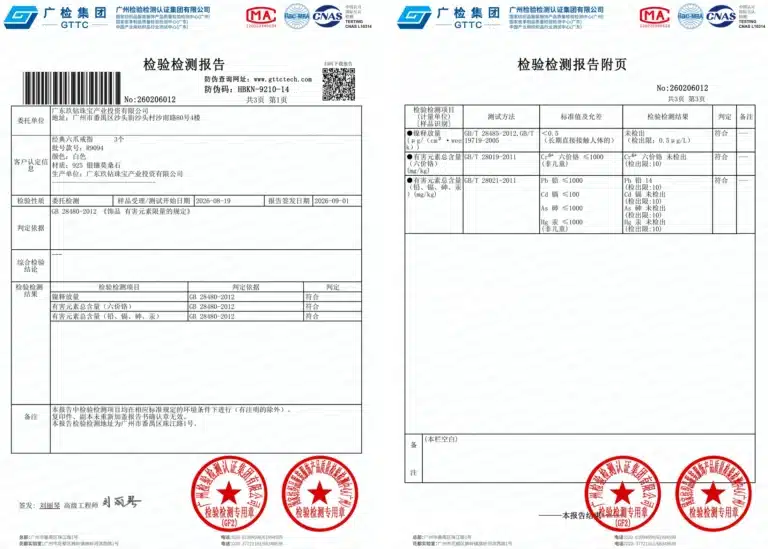









All three evidence formats appear in real claims, but they do not prove the same thing. For S925 sterling silver and moissanite jewelry, the question that decides a claim is not the format — ruler close-up, unboxing video, or inspection report — but the origin of the defect. Plating scratches and transit oxidation point toward transport and warehouse handling, so that evidence package is built against the carrier: carton condition, packing state, and one continuous unboxing video. Casting pits, darkened solder seams, and moissanite girdle-edge chips are born at the casting, soldering, setting, or polishing bench, so macro photography against the approved golden sample decides. An inspector’s report pins the goods’ condition before handover. Match the evidence to the cause and most claims settle in one round instead of three.
What Does Each Piece of Evidence Actually Prove?
Most claim advice you will find online is written for parcel couriers or vehicle freight — a crushed crate, a scratched door panel, a dented bumper photographed for an auto-transport surveyor. S925 jewelry claims follow the same legal logic but a different defect map: one carton can contain a bench-made defect and a transit-made defect at the same time, and each needs different proof. Three evidence formats dominate the conversation:
| Evidence | What it proves | What it cannot prove | Where it decides the claim |
|---|---|---|---|
| Ruler close-up | Location, size, and depth of a scratch, pit, or chip on the piece itself | How or when the damage happened | Factory-side defects: casting pits, solder seams, girdle chips |
| Unboxing video | Sealed packaging chain, carton condition at receipt, first sight of the goods | Anything about workmanship under the stones | Carrier-side defects: transit scuffs, water damage, crush |
| Inspector’s report | The goods’ condition before handover, on a sampled or 100% basis | What happened inside your own warehouse afterward | Disputes where the factory denies it shipped the defect |
The rest of this article maps S925 and moissanite defects to the process stage that usually created them, then lists the photo and video combinations that actually move a factory QA manager or a cargo surveyor.
Which Defects Point to the Factory — and Which to the Carrier?
Attribution is the step most claims skip, and it is why so many die in back-and-forth email. Work backward from the defect to the process stage that can create it.
Plating scratches and oxidation: often transport or warehouse
A scratch through rhodium or gold plating down to bare silver is an abrasion story: something rubbed the surface after it left the polishing wheel. Read the packaging first. Plating scratches that arrive alongside scuffed inner boxes, pieces loose in their polybags, or a crushed outer carton belong in a carrier claim. Oxidation is subtler and cuts both ways. Tarnish visible under an intact coating points at the plating line, not the truck — as the site’s plating-claim guide explains, a pore or coverage gap under sound coating is a plating process escape and therefore a supplier claim. Powdery white corrosion inside water-stained cartons is a wet-transit story. And humidity-driven tarnish built up over months in storage lands wherever risk passed under your Incoterms — often with the buyer — one more reason the carton condition photos matter.
Casting pits and darkened solder seams: made before packing
Gas porosity leaves pinholes in the silver surface before any stone is set; a solder seam that reads dark or sandy was under-polished or firestained at the bench. Neither can be created by a bumpy flight — a pit is a casting void, and a seam’s color was fixed when the torch was lit. If the cartons arrive clean and sealed, these are factory claims, and the packaging evidence mainly serves to close the carrier question. Compare each pit against the golden sample and the PO’s surface-finish spec, and photograph several affected pieces from the same carton: porosity is a batch behavior, not a single-piece accident — five pieces with the same pitting are harder to argue with than one.
Moissanite girdle chips: born at the setting and polishing bench
Moissanite sits just below diamond on the Mohs scale — around 9.25 — so daily wear rarely chips it, but the thin girdle edge stays brittle under point pressure. That pressure is a bench event: prong-closing pliers, bezel burnishing, a polishing wheel touching a stone edge, or steel tweezers gripping the girdle. A transit-made chip almost always brings supporting metal damage with it — a bent or snapped prong, a dent, a stone knocked from its seat — plus a dented box. A chip fully seated under an intact prong, in a piece whose metal shows no impact mark and whose carton arrived sealed, is a setting or polishing defect. One practical check: Amara sets stones under 40x magnification and sells certified moissanite with a laser-inscribed girdle, so a factory with that profile can match your macro photo against its own setting records for the PO.
What Photo Evidence Will the Factory Actually Accept?
A QA manager reading an arrival claim asks three questions of every photo: which piece, what scale, what light. Build each defect set with the following:
- One full-frame shot with a metric ruler laid beside the piece, the scale readable, so the defect’s position can be located against the technical drawing.
- One macro shot of the defect itself — a clip-on macro lens or a jewelry loupe held in front of the phone camera is enough; 1:1 detail is the goal.
- Angled raking light for scratches, so the score catches a shadow, and direct flash for pits and porosity, so depth reads as highlight against shadow.
- An identity shot with the SKU tag, lot number, or PO reference in the same frame as the defect.
- A batch shot — every affected piece from one carton laid out on a single neutral tray in one photo, not twenty crops.
Shoot on a neutral background, in daylight or one defined lamp position, with no filters and no beauty-mode processing — a smoothed photo is a rejected photo. Name files by SKU and position so the factory’s QA can answer photo by photo without re-shooting. This mirrors how pre-production approval works: the sample inspection checklist asks you to photograph every checkpoint against the golden sample and approve in writing with the drawing revision number. An arrival claim is the same exercise run in reverse.

Video Evidence: Batch Video Before Shipment, Unboxing Video on Arrival
Two videos protect the two ends of the same chain. Before shipment, a batch video ties workmanship to your order: the batch-video guide defines five parts in one continuous take — an identity board with PO number, date, and carton count; cartons opened on camera with seals intact; raking-light close-ups of plating; stone setting filmed under 40x magnification; and a closing pan across the sealed cartons. Its rule is worth quoting: “the video is a deliverable, not a courtesy.” Footage shot while the goods were still at the factory is your strongest rebuttal when a factory later argues the defect was made in transit.
On arrival, the unboxing video takes over. One continuous take, no cuts: show the waybill and shipping marks, rotate the sealed outer carton through all six faces, cut it open, lift out the inner boxes with their seals visible, and film the first sight of the pieces. A cut is the moment a carrier’s surveyor stops believing the footage. Video proves the packaging chain — it cannot prove silver purity, plating thickness, or stone identity, which is why the factory-side defects above still need macro photos. This factory close-up reel shows the standard to aim for: continuous, well-lit framing of an S925 moissanite piece’s stone seats, prong tips, and plating surface.
Shoot your arrival unboxing to the same standard — uninterrupted, labels readable, first contact on camera.
Timing matters on the carrier side. Under the CMR road-freight convention, reservations for non-apparent damage must be made in writing within seven days of delivery, Sundays and public holidays excepted, and apparent damage must be noted at delivery itself.
Does a Claim Need a Third-Party Inspection Report?
Not always — but know what each side shifts. Amara’s published QC is a final inspection to AQL 2.5 with a 100% claw check and pull test on every piece, so the factory side already holds an inspection record it can produce when a dispute starts. Your counterweight is evidence tied to your lot; the plating-claim guide’s warning applies across defect types — a test report only helps a claim tied to the lot you are claiming against. Order a third-party pre-shipment inspection on first orders, high-value runs, or whenever a factory’s claims history turns adversarial. The report should cite the PO specification it checked against — for US-bound goods, the FTC Jewelry Guides at 16 CFR Part 23 define what a “silver” description means, so the report and the marks on the metal should tell the same story. Keep the pre-production sample and its written approval, because that golden sample is the reference your arrival photos will be judged against.
How Should You Structure the Claim Package?
Factories and surveyors read claims top-down, and a clean structure shortens the reply. One email, in this order:
- Subject line with the PO number and the word “claim,” so it stays searchable.
- A five-line summary table: SKU, ordered quantity, affected quantity, defect type, attributed cause (factory, carrier, or storage).
- Packing-state photos and the unboxing video link — the carrier-facing exhibits, placed before the defect close-ups.
- Per-defect photo sets, each opened by the ruler frame, then the macro, then the batch shot, every file named by SKU and position.
- The pre-shipment record: batch video reference, inspection report, and the golden-sample approval with its drawing revision number.
- A concrete remedy request — rework and replate, replacement, or credit — and the response window you need.
Send the carrier’s copy separately, but the same day: the CMR seven-day written window for non-apparent damage does not wait for your factory negotiation to finish.
Soalan Lazim (FAQ)
Should I refuse the delivery if cartons look damaged?
Usually no. Refusing sends the goods back before anyone has agreed what the damage is, and you lose the chance to build one evidence set that serves both the carrier and the factory. Accept the goods, sign with written reservations where the delivery note allows, photograph and film the same day, and file the written notice inside the convention window that governs your route.
Can the factory blame my warehouse for the tarnish?
Only with evidence. A scattered pattern — three pieces from three different cartons — can genuinely come from humidity, perfume, or pool chemicals. A clustered pattern — half a carton, same defect, same position — is a process escape. Answer pattern questions with pattern evidence: lot number, affected-piece count, discoloration location, and packaging condition.
Who pays for re-plating scratched pieces?
Follow the attribution. Plating below the micron floor written in the PO is a supplier cost; transit abrasion with documented packaging damage is a carrier or insurance cost; isolated wear-through on conforming plating usually becomes a shared plating-refresh repair. The plating-claim guide details the substrate tests — XRF, file-and-acid, cross-section — that decide which bucket a given scratch falls into.
Are arrival stone chips covered by warranty?
Amara publishes a 12-month color-fastness warranty with free stone re-setting; confirm the exact scope and exclusions in your PO before relying on it. Remember the warning worth keeping from the plating guide: a warranty governs what the supplier will fix — it does not document what arrived, so the photo set still does that work.
How fast should I send everything?
Same day for the carrier notice where the CMR applies, and within a few days for the factory package. Every day between arrival and documentation is a day the factory can argue the damage happened in your own warehouse instead.