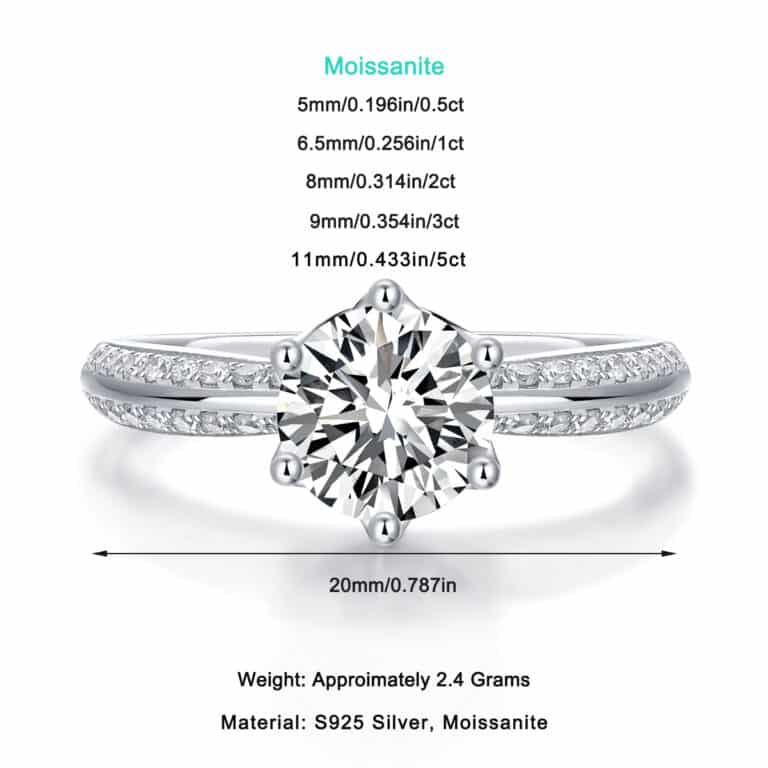









Short answer: the $120 should come off the bulk invoice as a named credit line, and if the proforma invoice (PI) never says so, the factory normally keeps it. A sample is invoiced as a small separate sale, so reversing it takes a document, not a promise. Amara’s published FAQ states that sample fees are credited on the first bulk order, and the custom jewelry page describes samples as credited against the bulk order. That is the intent; the PI is the execution. On a 1,000-piece order the credit is worth $0.12 per piece, so the real value is the precedent and the audit trail. Write it as a negative line citing the sample invoice, name the style and plating specification, set the trigger at 1,000 pieces or more, add a calendar expiry, and state in words that plating surcharges, tooling and freight are excluded.
Does a factory deduct a $120 sample fee by default, or keep it?
It keeps it unless a document says otherwise. In most shops the sample is invoiced as its own small sale: metal, bench time, a plating-bath slot, stones, packing and courier. Finance books that as revenue; what reverses it is a credit note or a negative line on the bulk PI.
Two buyers with the same verbal deal get different results: one has the deduction printed on the PI, the other a chat message.
Amara’s published FAQ states that “sample fees are credited on your first bulk order,” and the custom jewelry page describes samples as coming “from the production line, credited against the bulk order.” Those sentences set the intent. They do not create the accounting entry. The job at 1,000 pieces is to convert the sentence into a line item.
At 1,000 pieces, $120 is $0.12 per piece. The money is a rounding error; the precedent is not.
What is the $120 actually paying for?
Split the charge before arguing about the credit: some cost elements scale with the bulk run, others do not.
| Cost element | Inside the $120? | Effect on the credit |
|---|---|---|
| Silver, findings and bench labor | Oui | The part a credit can genuinely return |
| Sample plating: bath time, color, thickness | Oui | Refundable, but it prices only the sample |
| CAD, wax and 3D print | Sometimes | Engineering, not hardware; often excluded |
| Courier | Sometimes | If bundled, the credit repays freight too |
| Tooling or mold | Non | A different clause with different economics |
| Rush or hand-carry surcharge | Non | Rarely creditable; name it as excluded |
A sample occupies a rack position in a plating bath, a setter’s hour and a courier slot whether the run behind it is one piece or 1,000; the bulk run spreads the same setup across 1,000 units. That asymmetry is why a factory can credit the sample on a large order without losing money, and why it will not credit a sample for a different configuration.
Before the deduction talk, ask whether the $120 includes the courier and CAD, and whether the sample’s plating matches production in color and thickness.
What should the sample-credit line look like on the PI?
Put it in the body of the PI, between the goods lines and the total, so the arithmetic is visible to whoever approves the deposit. A credit only in a covering email is a favor; a credit in the totals column is a term.
| PI line | Description | Amount (USD) |
|---|---|---|
| 1 | S925 [product], [plating specification], style [SKU], 1,000 pcs | [unit price] x 1,000 |
| 2 | Tooling, only if a new mold is quoted | [quoted separately] |
| 3 | Sample credit, ref. sample invoice [number], paid [date] | -120.00 |
| 4 | Freight to [destination] under [Incoterm] | [per quote] |
| Net payable before deposit | [goods + tooling + freight – 120.00] |
Six elements make it work: amount and currency (a USD credit on a CNY invoice needs a fixed rate and date); the sample invoice number and payment date; the style, mold and plating color and thickness; the trigger, written as “1,000 pieces or more”; a calendar expiry; and the exclusions.
Model wording, a drafting template rather than a quotation: “Sample credit: USD 120.00, one time only, against sample invoice [number] paid on [date]. Applies to the first bulk order for style [SKU] in the sampled plating specification, 1,000 pieces or more on a single PI, shipped on or before [date]. Plating surcharges, tooling, certificate fees, rush charges and freight are excluded. Not transferable and not deductible on reorders.”
Why a negative line beats an email promise
Accounts payable pays documents. A negative line changes the deposit base and appears on the commercial invoice that the broker and bookkeeper both see. If finance cannot post a negative line, ask for a credit note with the same six elements and a named invoice. The mechanism can differ; the content cannot.
Which three limits must sit beside the $120?
What counts as the same style and plating?
“Same style” should mean the same mold and cavity plus the same bill of materials, not a product name either side can rename. On gold-plated S925 the plating is part of the configuration: color, thickness, and whether the piece is vermeil. Amara publishes 18K vermeil at a minimum of 2.5 microns over recycled 925 silver, with a rhodium option, so a sample plated at a thinner decorative layer is not the same product as a 2.5-micron run. If the 1,000 pieces change color or thickness after approval, decide in advance whether the credit survives; the default answer is no.
1,000 pieces: does exactly 1,000 count?
It counts only if the PI says “1,000 pieces or more.” Decide whether the trigger is one PI or an aggregate of releases, and if the order ships in batches, name the invoice that carries the credit. “First shipment invoice” is specific; “when the order completes” invites a dispute at the last shipment.
How long should the credit stay valid?
“Next order” has no expiry, which sounds generous and behaves badly. Amara publishes a 7–10 day sample lead time after CAD confirmation and a 15–25 day bulk window, so the date must cover sampling, approval, PO issue and production. Write a calendar date, and say what happens if approval runs long.
Three limits decide whether the credit survives: configuration, quantity and date. The edge cases are where credits disappear.
| Scenario | Default without wording | What to write |
|---|---|---|
| 800 pcs instead of 1,000 | Kept | Pro rata at $0.12 per piece, capped at $120 |
| Plating color or thickness changed | Kept | State whether the credit survives the change |
| 1,000 pcs split across two POs | Ambiguous | Name the invoice and define the aggregate window |
| Reorder of the same style | Kept | One credit per sample invoice, not per order |
Are plating fees, mold fees and freight inside or outside the credit?
Most $120 credits quietly shrink here: a sample-fee clause covers the sample fee, not every charge on the same quote.
| Charge | Part of the $120? | Credited? | What to write |
|---|---|---|---|
| Plating on the sample | Usually yes | Yes, inside the $120 | Nothing extra |
| Bulk plating surcharge, other color or thickness | Non | Non | “Separate and not offset by the sample credit” |
| Tooling or mold for a new design | Non | Non | Separate tooling clause |
| Sample courier | Sometimes | Only if bundled | “Sample freight included and credited in full” |
| Bulk freight and insurance | Non | Non | Allocated by the Incoterm |
Why the plating surcharge is the one that bites
A sample may be plated at a decorative thickness to prove color; production may specify a thicker layer, another karat, or rhodium on part of the piece. The $120 bought the first configuration; the second is priced per unit across 1,000 pieces, and a factory will not let a $120 credit absorb an upgrade that costs more than the credit. The description matters too: the FTC’s consumer guidance defines vermeil as gold over sterling silver and notes that plating wears with thickness. A PI that says “gold plated” for a piece the sample room called vermeil describes two products, and a credit tied to “the sampled configuration” has nothing solid to attach to.
Does a mold fee get credited like a sample fee?
No. Tooling is an engineering cost tied to a design; a sample is a unit of production. Amara publishes no tooling fee on reorders and free storage of molds and CAD for three years, which is a reorder term, not a sample-fee term. If the first order carries tooling, negotiate it separately: amortized across the run, credited on a second run, or paid once and owned by the buyer. Our setup-fee and reorder policy guide separates the two.
Who pays the sample courier and the bulk freight?
Two freights, two answers. The sample courier is often billed at cost; ask whether it sits inside the $120, because if it does, the credit is partly a freight refund. Bulk freight is allocated by the Incoterm, not the credit clause: the ICC’s règles Incoterms 2020 allocate cost and risk across eleven terms. Keep the credit out of the freight line.
Where on the PI should the credit sit?
Position changes when the cash arrives. Suppose the PI total is goods plus tooling plus freight, less the $120 credit, on 30% deposit and 70% balance before shipment, as Amara publishes. Above the deposit line, the deposit base shrinks by $120 and the buyer recovers $36 at deposit and $84 at balance. Applied to the balance invoice, the full $120 returns in one payment. Same credit, different timing.
Keep the credit next to the goods lines, not freight, so the commercial invoice shows a price adjustment on merchandise. If the factory “absorbs” it by lowering the unit price while the PI shows a credit, a broker will ask which number is the price.
What if the factory refuses to put the credit on the PI?
Ask which part it objects to: cost-priced sample, non-repeating CAD, quantity below the threshold, or a finance system that cannot post a negative line. Only the last is a mechanism problem. Then choose deliberately: a smaller credit, a credit note, a tooling-clause credit, or the $120 booked as a design cost. Do not proceed on “we will take care of it.” If the order is still being quoted, fold this into the PO checklist behind a firm quote.
Frequently asked questions
Is the $120 sample fee automatically deducted from a 1,000-piece order?
No. It is deducted only when a document says so. Amara’s published FAQ states that sample fees are credited on the first bulk order, but the deduction still has to appear as a credit line or credit note with a reference, an amount, a configuration, a quantity trigger and an expiry.
Does the credit cover the mold fee or the plating surcharge?
Not by default. Tooling is a separate engineering charge, and a bulk plating surcharge for another color or thickness is a separate per-unit charge. If either should be covered, write it as its own clause.
Does the credit reduce the 30% deposit?
It reduces whatever total it sits above. Placed above the deposit line on 30/70 terms, it returns 30% at deposit and 70% at balance. Placed on the balance invoice, it returns the full amount in one payment.
Which documents should the buyer keep?
The sample invoice, the bank slip, the courier tracking number, the approval record and the PI showing the credit line. Those five are what a bookkeeper or broker needs if the credit is questioned a quarter later.
What should be checked before signing the PI?
The test is six lines. A negative line with a dollar amount and currency. A reference to the sample invoice and payment date. The style, mold and plating specification. A trigger that reads “1,000 pieces or more.” A calendar expiry. A list of excluded charges: plating surcharge, tooling, certificate fees, rush charges, freight. If any is missing, the $120 is still a promise rather than a term, and what the factory keeps is the $120.
If a pre-production sample also needs sign-off, our guide to sample room versus production run lists what it must prove; the vermeil and recycled silver page sets out the plating specification.