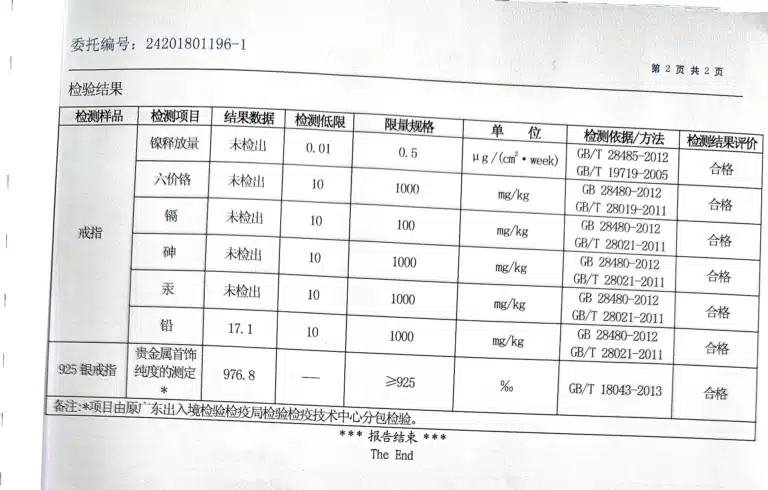








Jawapan ringkas: Kadang-kadang, tetapi bukan atas bukti yang sama. Siri EN 1811 yang gagal boleh ditanggalkan dan disadur semula apabila nikel datang daripada sistem salutan itu sendiri: strike nikel atau plat bawah, tangki saduran tercemar, atau salutan yang terlalu nipis di tepi. Ia patut dilupuskan apabila nikel berada dalam substrat atau dalam aksesori yang tidak boleh diganti, apabila pemakaian biasa akan mendedahkan logam asas, atau apabila penanggalan akan merosakkan keping itu. Pembezaan yang penting ialah antara menyadur semula keping dan membuktikan sesuatu lot. Spesimen yang gagal telah pun digesel dan didedahkan secara kimia; ia bukan sampel ujian semula yang sah. Lot yang dikerjakan semula memerlukan sampel rawak baharu, kitaran pemakaian EN 12472 sebelum EN 1811, keputusan setiap spesimen, dan kedua-dua laporan kegagalan asal serta laporan kerja semula dalam fail.
An EN 1811 Result Describes a Surface, Not a Batch
EN 1811 measures how much nickel leaves a surface during a week in artificial sweat. It does not measure how much nickel is in the metal. A piece can contain nickel and pass because none reaches the skin; a piece can contain almost none and fail because a nickel-bearing layer sits on top.
For coated articles, the route runs through EN 12472 first: accelerated wear and corrosion approximating two years of use, then EN 1811 on the worn surface. The Danish EPA’s nickel fact sheet puts it plainly: a nickel-free coating must keep release below the limit for at least two years.
The first question is therefore not how far over the limit the batch landed, but which surface failed, at what wear state, and what sits beneath. Root cause decides rework versus scrap, not the size of the number.
Which Failures Can Be Re-Plated, and Which Cannot
The table below is the decision we would apply before touching a failed lot. “Conditional” means the plating line must prove the condition.
| What failed | Rework or scrap? | Reason |
|---|---|---|
| Nickel strike or underplate under gold | Usually rework | Nickel sits in the coating stack and can be stripped to substrate. |
| Nickel contamination in a “nickel-free” bath | Rework after the bath is rebuilt | The cause is the process, so every piece in the lot shares it. |
| Thin or missing coating at edges or clasp tongues | Conditional | Only if the geometry can hold minimum thickness. |
| Nickel-bearing alloy such as nickel silver | Conditional to no | The barrier must survive EN 12472, not just inspection when new. |
| Nickel-bearing clasp, pin or spring | Rework if the finding is replaced | Plating over it is a barrier bet; substitution is a fix. |
| Porosity, corrosion pits or casting voids | Scrap | Stripping opens them and traps chemistry; plating bridges but does not heal. |
| Stones that cannot survive stripping | Scrap or disassemble | Pearls, opals, glued stones and delicate settings rarely survive. |
| Mixed lot with no traceable sub-lots | Scrap | You cannot define the population the retest must represent. |
The nickel underplate is the most common reworkable failure, and the most common failed rework: the gold is stripped, the surface looks clean, and the nickel is still there. Removal must be verified, not assumed. The second trap is the finding, often the highest-wear part of the piece.
What Re-Plating Has to Mean Before Anyone Calls It a Fix
Re-plating is not a cosmetic top-up. It is a re-manufacturing step with four controls.
- Strip to a defined layer. The specification must say whether the strip stops at bare substrate or at a verified nickel-free barrier.
- Verify nickel removal with process coupons and spot checks. XRF can confirm presence and thickness here; it cannot confirm release.
- Qualify the strip against the substrate. Silver, brass, solder and stone settings do not tolerate the same chemistry.
- Plate to a stated minimum, measured at the thinnest point on the contact surface, not averaged across the rack.
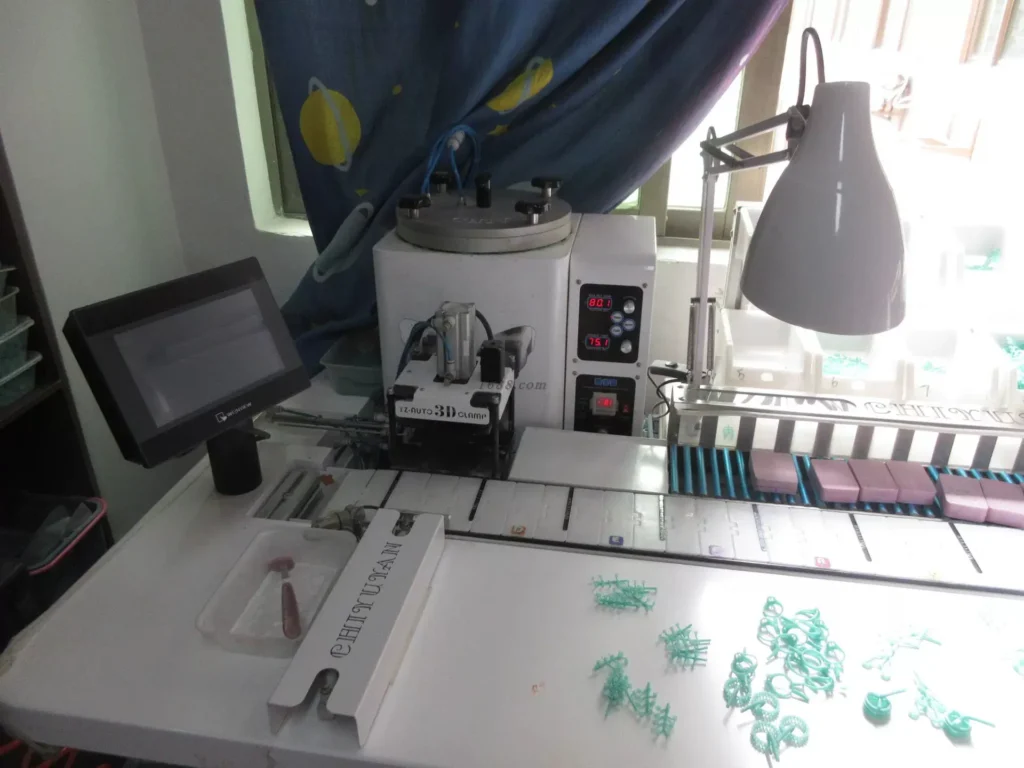
A barrier is a fix only if adhesion, edge coverage and corrosion resistance are qualified as one system and the piece passes the worn-state test. At Amara, plating runs in Shenzhen rather than through an outside vendor, so a rework decision can be tied to a bath, a rack and a shift. Our gold vermeil line is specified at no less than 2.5 microns of 18K over recycled 925 silver. Traceability makes a rework report credible; it does not make every failed lot worth reworking.
Why the Retest Has to Run EN 12472 First
Testing intact, freshly re-plated pieces is the easiest way to manufacture a false pass. A new coating looks continuous because it is new. EN 12472 exists to find out what happens when it is not.
- Test the worn state. The lab receives pieces that have been through the EN 12472 cycle, not pieces pulled from the plating rack.
- Test the minimum thickness. If the spec is a range, the sample represents the low end; a thick “golden sample” proves nothing about the lot.
- Test the worst geometry. Edges, holes, engraving recesses and clasp tongues fail first; a sample that misses them is not conservative.
Posts are stricter: 0.2 micrograms per square centimetre per week for assemblies inserted into pierced ears, against 0.5 for other skin-contact articles. A nickel-bearing post should be replaced, not plated over.
Bolehkah Keping Ini Disadur dan Diuji Semula?
Physically, yes. Evidentially, no. The failed pieces have spent a week in artificial sweat, and coated ones were abraded first. Their surfaces no longer represent the lot. Re-plating those exact specimens is a useful engineering trial; it is not proof that the batch is compliant.
The defensible sequence is:
- Quarantine the lot at the point of failure; do not return it to general work in progress.
- Retain labeled failed specimens with lot, SKU and report number.
- Rework the whole affected lot, or a defined sub-lot, under a rework order that still carries the original lot ID.
- Draw a fresh sample from the reworked lot and test it.
There is another reason. If the specimens came from a rack edge where coverage was thin, re-plating them and passing says nothing about the rack center. Only a fresh sample drawn across the lot shows whether the fix reached the population.
How to Sample a Reworked Lot So “Per-Piece” Is Defensible
Results are reported per specimen. No batch average can rescue a failing piece; the lot passes only when every tested specimen passes under the stated decision rule.
Define the lot narrowly: one design, one alloy, one plating batch, one line and, where it matters, one shift. If rework ran across several racks, sample across all of them and say so.
- Sample randomly, not from the top of the bin.
- Include the thinnest measured coating and the highest wear exposure.
- Record specimen IDs traceable to a piece, rack and date.
- Require per-specimen values, sample size, selection method and decision rule; a mean is not a release decision.
Be honest about the limit. EN 1811 is a laboratory method, not a production-line test. Even a generous sample gives statistical confidence, not a certificate for every piece. The defensible claim has three layers: process records, thickness data and worn-state lab results. XRF belongs in the first two; it measures what is on the piece, not what leaves it. AQL 2.5 is also separate: it samples for visible and functional defects, so a lot can pass AQL 2.5 and still fail EN 1811, because the failure is invisible.
What a Reworked-Lot Test Report Must Say
A retest report is only useful if a buyer, auditor or customs officer can reconstruct what happened. It should carry:
- A header identifying a reworked-lot retest, not an original production test.
- Original lot number, original failed report number and date, failure mode and quantity affected.
- Rework scope: strip method, nickel-removal verification, new coating spec and minimum thickness, date and line.
- Sample size, selection method and specimen IDs.
- Test sequence with versions: EN 12472:2020, then EN 1811:2023.
- Per-specimen results, decision rule and pass or fail for each.
- Lab name and accreditation, plus a statement that the report does not replace the original.
Keep both reports. The original records the nonconformity; the retest proves the action worked. The Danish EPA fact sheet cites a five-year retention requirement in Denmark, a useful minimum. A declaration of conformity should reference both, and the reworked lot should keep its original identity in the quality system. Re-dating it destroys the traceability the rework was supposed to create.
Di Mana Sebenarnya Garisan Lupus
The scrap line is not a failure percentage. It is a set of conditions. Scrap if any one is true:
- The nickel is in the substrate or a finding that cannot be replaced. A barrier over nickel-bearing metal is a bet EN 12472 is built to test.
- The contact surface is a wear point. If the design guarantees breakthrough at the clasp or edge, re-plating restarts the same clock.
- Stripping would exceed the dimensional budget: threads, hinges, engravings, stone seats, thin prongs.
- The stones cannot survive the process; damage risk outweighs recovered value.
- The lot cannot be segregated and traced. An untraceable lot can be hoped for, not proven.
- Rework, retest and schedule risk cost more than replacement. That needs real quotes, not a rule of thumb.
- The goods are already on the market. Factory rework does not answer a withdrawal or recall.
Nickel-release failure cannot be sorted by eye. You cannot pick bad pieces out the way you pick out a bent prong. If the cause could be in any piece from the same plating batch, every piece is suspect. “We will sort the batch” is not a plan. Either the lot is reworked and retested as a defined population, or it is scrapped. Record scrap with quantity, SKU, lot and reason.
The same logic belongs in the purchase order before the first batch: method names, minimum coating thickness, per-specimen reporting, the failure-handling rule, and change control on baths, barriers and findings. If you are diagnosing a plating failure rather than a nickel-release failure, our guide to plating defect claims covers the receiving tests and payment logic. Our halaman persijilan publishes the test documents we hold, and the manufacturing and quality category collects the related factory guides.

Soalan Lazim (FAQ)
Can a factory strip and re-plate a batch that failed EN 1811?
Yes, when the nickel source is in the coating system and the strip removes it without damaging the substrate, solder or stones. No, when the nickel is in the base alloy or a finding, or when the design exposes the substrate in wear. Root cause decides; the test result alone does not.
Does a passing retest erase the original EN 1811 failure?
No. The original report stays on file as the record of nonconformity; the retest is a separate report showing that corrective action worked. A clean report with no reference to the failed lot removes the audit trail.
Is re-plating a good idea for earring posts?
Usually not. Posts for pierced ears are held to 0.2 micrograms per square centimetre per week, stricter than the 0.5 for other skin-contact articles. Replacing a nickel-bearing post is more reliable than plating over it.
How many pieces have to be retested?
Enough to represent every rack, cavity and shift in the reworked lot, with the worst-case geometries included. The number belongs in the purchase order and the report. More pieces are needed when the failure was patchy or the geometry is hard to coat.
Can XRF testing replace EN 1811?
No. XRF reads composition and coating thickness, not how much nickel leaves the surface in sweat. Use it to control the process and screen materials; use EN 1811 for the compliance decision.
What if only one or two percent of the batch failed?
A low failure rate does not make the rest safe. It means the cause is rare or unevenly distributed, and those are different problems. If a bath or material lot touched every piece, the untested pieces are unproven. If the cause is confined to a traceable sub-lot, quarantine and test that remainder, but define the population first.