







For a US-bound shipment of S925 jewelry, a supplier declaration is usually enough to clear customs, because CBP does not list a third-party assay certificate as a routine entry document. The exposure is narrower and sharper: if your pieces carry a 925 or sterling quality mark, CBP can treat an overstated mark as a prohibited importation under 19 CFR 11.13, and it can take samples for its own laboratory under 19 CFR 151.52. The buyers who avoid holds are the ones who arrive over-documented: a 925 and sponsor’s mark self-check before packing, per-batch XRF composition reports archived and ready to send, a written agreement with the factory and broker that assay acceptance means 0.925 silver with the 0.004 deviation of 15 U.S.C. 296, and — since the August 29, 2025 suspension of de minimis — a formal entry under the 10-digit HTS 7113.11 lines even for low-value batches.
What CBP Actually Requires for a US-Bound S925 Entry
Customs clearance for jewelry is paperwork-first. The commercial invoice must carry the facts necessary to a proper appraisement, examination and classification of the merchandise; the packing list and transport documents follow, and the entry is classified in the Harmonized Tariff Schedule. Nowhere in that chain does a rule say “attach a third-party assay certificate for silver jewelry.” The certificate culture around 925 comes from retail marketplaces and EU/UK hallmarking, not from the entry process itself.
What CBP holds instead is leverage over the mark and over the metal. Two provisions do the work:
- The mark. До 19 CFR 11.13(b), articles of gold or silver marked to show a greater degree of fineness than the actual fineness are prohibited importations and are detained, with the facts reported to the U.S. attorney. Plated or filled articles must also be labeled to show that condition — stamping a base-metal piece 925, or leaving a plated S925 piece described as solid silver, is exactly the fact pattern this regulation exists for.
- The metal. Title 19 Part 151 governs the examination, sampling and testing of merchandise, and 19 CFR 151.52 shows how CBP sampling works in practice: samples are taken under Customs supervision for testing by the Customs laboratory, and where commercial sampling is not possible, the importer supplies a prepared assay sample labeled with the entry number, the lots represented, and the sampling date and place.
So the question is not “declaration or certificate” in the abstract. It is which documents you can produce in the first hours after CBP questions the 925 mark — and whether your broker can answer a fineness question with a number instead of an apology.
When a Supplier Declaration Is Enough
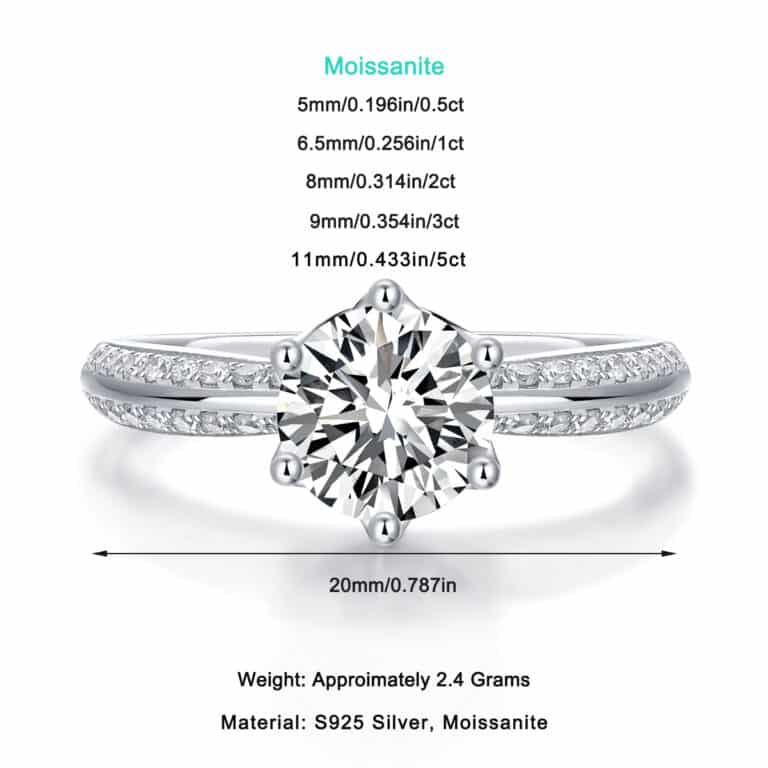
A factory-issued declaration of composition — alloy 925 sterling, with the production lot referenced — carries an unremarked shipment through clearance the same way it carries any consumer good: the goods match the invoice, the description is specific, and the classification is defensible. This is the normal state of affairs for our own orders from the Shenzhen factory floor; every S925 moissanite piece we ship is produced against a tested-purity target we publish openly — 976.8 per mille tested silver purity — with micro-pavé set under 40x magnification and 100% pull-testing, and the composition paperwork travels with the shipment.
Declaration-only clearance holds as long as three things stay true: the quality mark on the metal matches the metal itself, the HTS line matches the goods, and CBP has no reason to doubt either. The moment one of those wobbles, the declaration stops being evidence and becomes a claim that needs backing.
When CBP Wants More Than a Declaration
The mark is challenged — the 19 CFR 11.13 detention track
If an officer doubts that a piece stamped 925 actually contains 925 parts silver, the shipment is not merely taxed differently; it is detained as a prohibited importation. From there the regulation offers an expensive menu: file a petition and have the prohibited marking removed or corrected, export the goods, or destroy them under Customs supervision. None of those options delivers your season on time. A third-party assay report, or your own per-batch XRF records, is what usually prevents the doubt from forming in the first place — and it is the first thing your broker will ask for if a detention notice arrives.
CBP samples the shipment — the laboratory track
When CBP takes samples under Part 151, the goods sit while the Customs laboratory works. An examination hold is typically resolved in 24-to-48-hour increments at the exam site; what turns a short hold into a weeks-long referral is a laboratory sample that your paperwork cannot answer. This is the practical reason behind the buyer habit we recommend: require an XRF composition report for every casting batch, archive it against the batch number, and be able to email the relevant report the same day an officer or broker asks. A prepared assay sample, offered under the importer-supply route that 151.52 itself describes, is far cheaper than a laboratory referral you cannot rebut.
The classification is questioned
Silver jewelry enters under heading 7113, and the silver subheading 7113.11 — articles of silver, whether or not plated or clad with other precious metal — splits into three 10-digit statistical lines with materially different duty rates, as the USITC tariff tool shows: chains and similar continuous-length articles at 6.3%, pieces valued not over $18 per dozen at 13.5%, and everything else at 5%. A declaration that says “925 silver jewelry” without the 10-digit detail invites the broker to guess, and guessing between 5% and 13.5% is how disputes start. CBP’s own e-commerce guidance insists on a precise, specific description of merchandise regardless of value — the same discipline applies to a container of tennis chains.
The Pre-Shipment Checklist for a US-Bound S925 Order
Here is the working sequence we hand to buyers before any US-bound S925 order leaves the factory. It takes one production cycle to set up and it answers every question CBP is realistically going to ask.
Step 1 — Self-check the 925 quality mark and your sponsor’s mark
Before packing, verify on production samples: the 925 stamp is present, legible, and placed where the design allows; your brand’s maker’s mark — the sponsor’s mark, in UK and EU hallmarking vocabulary — sits beside it or on the clasp tag; and any plated component is described as plated. The sponsor’s-mark habit comes from the assay-office world and transfers cleanly to US practice: it ties the piece to you as the responsible party, which is precisely the accountability a customs officer is looking for. We cover placement and per-unit cost for a laser-etched brand mark next to the 925 stamp in a separate guide, and the four-mark logic behind it in our piece on UK and EU hallmarking.
Step 2 — Require per-batch XRF reports and archive them against the PO
Ask the factory for an XRF composition report per casting batch: batch number, sampling points, silver percentage, copper balance, and trace readings for nickel, lead and cadmium. File the reports where your broker can reach them. When CBP places a shipment in an exam hold and answers are needed within 24 to 48 hours, the difference between a same-day reply and a scramble is whether the batch report exists. For the third-party layer, we publish a GB 28480-2012 assay for our silver showing 976.8 per mille silver, nickel not detected, and lead at 17.1 mg/kg — the kind of independent record that answers a fineness challenge without touching the goods. Two inspection gates, pre-plating and post-plating, keep the batch data honest across the production run.
Step 3 — Agree the assay tolerance caliber in writing: 0.925 with the 0.004 deviation
The US standard for sterling is set by 15 U.S.C. 296: an article marked sterling must contain at least 925 parts silver per 1000, and the actual fineness may fall short of the mark by no more than four one-thousandths — 0.004. The statute adds a second, concurrent rule for the whole article including solder: total silver content not less by more than ten one-thousandths — 0.010 — with assay samples taken from parts free of solder. Put both numbers in the PO and confirm with your customs broker that an assay result of 0.925 down to 0.921 on a solder-free part — or within the 0.010 whole-article allowance — reads as compliant. We walked through exactly this arithmetic in our piece on a ring assayed at 91.8% silver: 0.918 misses the 0.004 mark tolerance but sits inside the 0.010 solder allowance, and which rule applies decides whether a claim is worth filing. A batch hovering at 0.920 will clear a US broker’s caliber and still fail a retail platform’s stricter reading — know which one governs your shipment.
Step 4 — File a formal entry under 10-digit HTS 7113.11 now that de minimis is gone
Executive Order 14324 suspended duty-free de minimis treatment for all countries effective 12:01 a.m. EDT on August 29, 2025: qualifying shipments, regardless of value, country of origin or mode of transport, are subject to all applicable duties, taxes and fees, and non-postal entries must be filed in ACE by a qualified party. The low-value S925 batch that used to ride through under Section 321 now needs a real entry — and with it the 10-digit statistical line: 7113.11.10.00 for chains at 6.3%, 7113.11.20.00 for pieces valued not over $18 per dozen at 13.5%, 7113.11.50.00 for everything else at 5%. Note the trap for small buyers: the cheapest per-piece goods can carry the highest rate, so the unit-value declaration and the classification have to be consistent. CBP’s e-commerce page puts it bluntly — when you buy goods online, you become an importer — and that is true whether the order is 300 pieces or 3,000. Confirm with your broker, in writing, which 10-digit line each SKU takes and that the assay caliber from Step 3 is what CBP should expect if the lot is sampled.
Часто задаваемые вопросы
Does CBP accept a factory-issued certificate instead of a third-party assay?
The entry rules do not name either document; CBP weighs whatever supports the declared fineness and classification. A factory declaration is the baseline. A third-party report — like the GB 28480-2012 assay we publish — is the tier that answers a challenge, because the testing laboratory is not the party whose goods are being tested. If your shipment is unmarked or the order is a routine reorder with history on file, the declaration is normally all that gets looked at.
What happens if CBP’s laboratory reads the silver below 925?
First check which caliber applies: the 0.004 mark tolerance on a solder-free part, or the 0.010 whole-article allowance including solder — the two rules are concurrent, not alternative, and the sample location matters. A result inside the allowance closes the question. A result below it makes the 925 mark overstated, which puts the shipment on the 19 CFR 11.13 track: petition to remove or correct the marking, export, or destruction.
Do small orders really need this after the de minimis suspension?
Yes. The suspension applies regardless of value and mode of entry, so a 40-piece sample-sized batch now enters with duties and a formal filing rather than riding free. Small batches are also where documentation is thinnest, which makes them disproportionately likely to draw a “prove the metal” question.
Does the moissanite stone change any of this?
No. Heading 7113 classification keys on the precious metal — the silver — not the stone, so the GRA certificate on our moissanite answers retail-listing and authenticity questions, not customs assay questions. The customs file for an S925 piece is about the alloy; the gem file is about the stone; keep both, but do not expect one to substitute for the other.
What does a compliant customs-ready S925 order look like at Amara?
Marked pieces with 925 and your sponsor’s mark, per-batch XRF records on file, a published third-party assay behind the factory data, AQL 2.5 final inspection, and production under the ISO 9001 system our certifications page documents — arriving on an entry that names its 10-digit line. That is the full stack a 24-to-48-hour exam hold ever asks you to produce, prepared before the container seals instead of after it stops.