







Do both, in that order — but neither is the fast way on its own. A side-by-side comparison against the CAD render catches layout errors in seconds: a stone dropped from the design, a bezel reshaped, a shank reading heavier than intended. Point measurements with a caliper and a 0.01 g scale then confirm the numbers a render cannot show you: band thickness, shank width, metal weight. For an S925 moissanite sample, though, the fastest correct method is actually a short per-SKU checklist, because the inspection guides most buyers find online are written for machined metal parts or construction snagging and never mention the four checks that decide a silver sample: stone-seat matching, plating color against a coded reference, the 925 stamp and your brand mark, and the stone paperwork. Every factory also runs sample approval differently, so agree the checklist — and who pays when a sample fails it — before you approve anything.
Side-by-Side Against the CAD Render or Point Measurements: What Does Each Actually Catch?
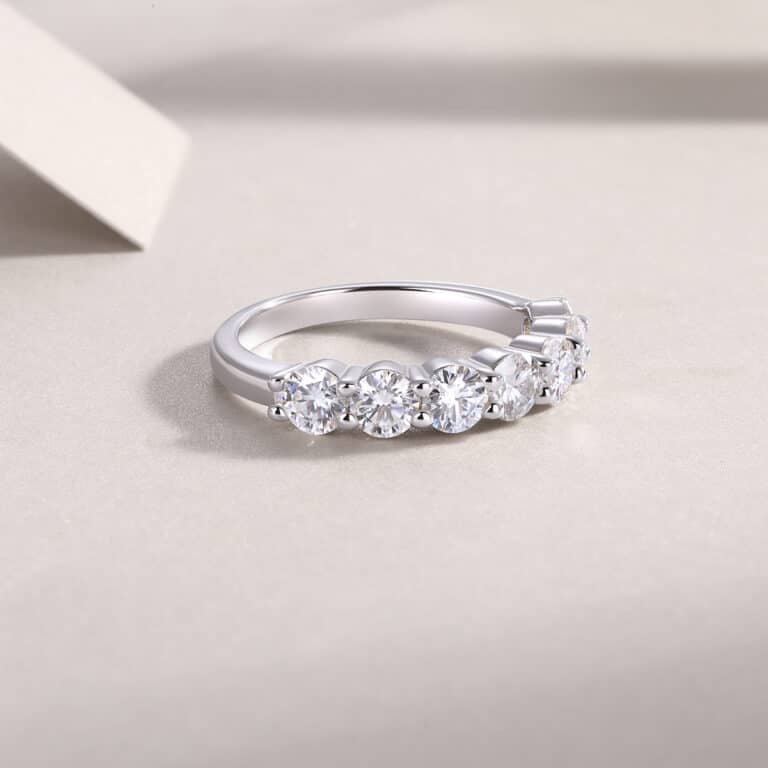
The render comparison is the fastest first pass because it catches design-intent errors the moment you pick the piece up. Hold the sample in the same orientation as the render, under the same neutral light, and walk it from face profile to side profile to gallery. You are looking for the obvious-but-fatal items: an accent stone missing from a pavé row, a bezel that came out round instead of marquise, a domed profile that flattened in casting, a gallery rail that sits higher than the drawing.
Then measure. A caliper on the drawing’s stated points confirms shank width and band thickness; a 0.01 g scale confirms metal weight; a ring mandrel or finger gauge confirms sizing. Renders hide all three — a render cannot tell you that a 1.8 mm band came out at 1.4 mm, but a caliper shows it instantly, and so does the scale.
What both methods miss is the point. Neither the render nor the caliper will tell you anything about plating shade, stamping, stone paperwork, or the condition of each stone seat — and those are exactly where S925 samples fail. That is why the answer is a checklist written for silver jewelry, not a generic first-article template. As a benchmark for what to demand in writing: our production standard calls for stone positions within ±0.05 mm, micro-pavé inspected under 40x magnification, and a 100% claw check with pull testing on every piece. If your factory will not put equivalent numbers on the drawing itself, no amount of render comparison will save the batch.
What Does a Per-SKU Checklist Cover That a Generic First-Article Checklist Misses?
Search for sample inspection checklists and you will find two genres: machining first-article forms built around dimensions, threads, surface roughness and material certificates, and construction snagging lists built around finishes and fit-out. Both are useful disciplines. Neither mentions a single item that decides whether an S925 moissanite sample matches your design — no stone seats, no plating color code, no 925 stamp. Before you approve anything, put these four lines on your own checklist and have the factory confirm each one against the physical sample.
1. Do the stone seats match the drawing, stone by stone?
Count every stone against the drawing’s layout table, including the melee accents a render draws invisibly small, and check each seat type per position: prong, bezel, channel or flush. Under a loupe, look for stones set at angles, sitting proud of the metal, or tilted out of the pavé line. Then test the claws — a loose claw passes every visual comparison and fails in week two on the wrist. A render comparison cannot catch any of this and neither can a caliper; the check only exists if your checklist names it. Ask the factory what claw testing they run per piece and get the answer in writing.
2. Does the plating color match a coded reference, not a photo?
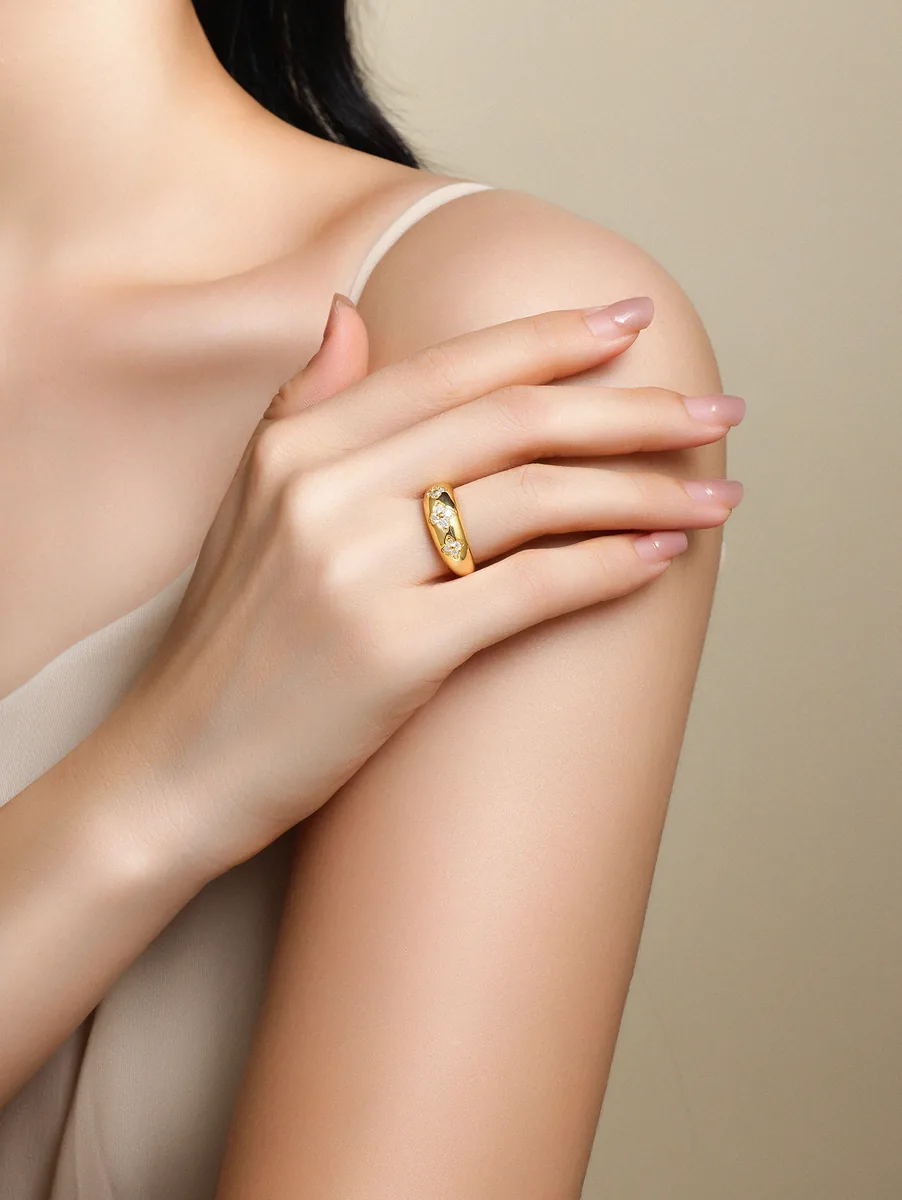
Plating color is where silver samples fail most often, and screens make it worse: a render shifts with the display, a photo shifts with the lighting, and “warm gold” means something different in every inbox. Ask the factory to state which color reference they plate against and to commit to a thickness. Our vermeil line, for example, is specified at 18K gold of at least 2.5 microns over recycled 925 silver, with a 12-month anti-tarnish plating warranty — the useful habit is not our numbers but the format: a coded reference plus a thickness in microns, both in writing. Check the sample in daylight against that reference swatch, never against the render on your phone — our guide to plating defects and claims shows what happens when this step is skipped.
3. Is the 925 stamp — and your brand mark — actually on it?
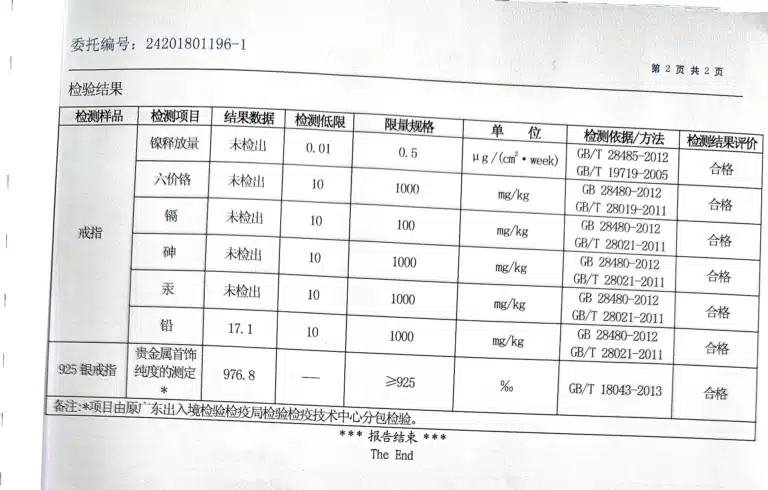
Turn the piece over. Under US rules, the FTC’s jewelry guides allow “sterling” only on metal that is at least 925 parts per thousand pure silver, with a four-parts-per-thousand tolerance on solder-free parts and ten parts per thousand where the tested part contains solder. If the goods are UK-bound, a bare “925” stamp is not enough: UK hallmarking law requires the sponsor’s mark, the fineness mark and the assay office mark on silver items over 7.78 g, applied by an assay office. Your own brand mark, laser-etched beside the 925, is a per-SKU item too — check its placement, depth and legibility on the sample, because the bulk run will copy whatever the sample shows.
4. Does the stone paperwork match this exact sample?
Moissanite normally ships with a grading certificate per stone or per model. Match the certificate to the physical sample — carat size, color grade, cut — and if the girdle is laser-inscribed, read the inscription under magnification and confirm it matches the certificate number on the document, not a template PDF. A certificate for “a stone like yours” proves nothing about the stone actually set in the sample you are holding.
Why Can’t You Just Sign the Factory’s Own Sample Approval Form?
Because every factory’s trial-order and sample policy is different, and the form in the box was written by the factory. The questions that actually govern your risk have no universal answer. Was this sample made on production tooling or in the sample room — because the production run will not be made by the sample room? Is the sample fee credited against the bulk order, or invoiced separately on every revision? If the sample fails your checklist, who pays for the redo — you, or the factory that missed the drawing? Ask all three before CAD work starts and put the answers into the PO. We keep molds exclusive and free for returning customers for three years, for instance; another factory may charge a mold fee on every revision. Neither policy is the industry standard, both are negotiable, and neither should be discovered after you have already approved. For what a pre-production sample must prove before you sign, see our separate guide on the sample room versus the production run.
How Do You Run the Full Check in About 30 Minutes?
Ten minutes on the render: sample and CAD side by side, same orientation, neutral light — stone count first, silhouette second, details last. Ten minutes on the numbers: caliper and 0.01 g scale against the drawing’s stated points, size on the mandrel. Ten minutes on the checklist: stone seats checked stone by stone, plating against the coded reference in daylight, 925 stamp and brand mark present and legible, stone paperwork matched to the sample. Photograph every checkpoint before you approve, then put the approval in writing with the drawing revision number and the checklist version referenced. Keep the approved sample as the golden sample — the physical reference for every later claim — and ask the factory to keep its twin on the production line where the bulk run is judged against it.
What Does Your Approval Actually Commit the Factory To?
The approved sample becomes the quality reference the bulk order is inspected against, so the final AQL inspection should be checked against your golden sample, not against anyone’s memory of it. Anything that changes after approval — stone layout, plating code, stamp position — needs a new drawing revision and a new sample; otherwise the factory is building to the old approval and is within its rights to. After-approval commitments also differ by factory: we back plating with a 12-month color-fastness warranty that includes free stone re-setting, and we film a batch video before the balance payment so buyers can spot-check production against the approved sample from their desk. The point is not that our terms should be yours, but that yours should exist somewhere in writing before the sample is approved.
Часто задаваемые вопросы
Can I approve a sample from photos and a video alone?
No. Video proves what a still cannot — claw tightness under movement, clasp action, how pavé reads as the piece turns — but it cannot prove plating color or plating thickness, and color is the single most common reason samples get rejected. Use a batch video as a second gate before the balance payment, and approve color only against the physical sample and a coded reference.
What tolerance should I write on the drawing for stone positions?
Whatever your factory will sign. Our published standard is ±0.05 mm on stone position with 40x inspection; some workshops will not commit to any number at all, which tells you the answer before the sample does. A tolerance the factory refuses to put in writing is not a tolerance — it is a hope.
Who pays when the sample does not match my drawing?
Whoever agreed to in advance. Sample-fee and trial-order policies vary from factory to factory: some credit the sample cost against the bulk order, some redo free only when the factory’s error is provable, some charge for every round after the first. There is no industry default, so set the split in the PO before CAD starts.
Does an approved sample guarantee the bulk run will match it?
No — it is one gate of several. Bulk castings come from different trees, plating baths drift, and stones are set by different hands. That is why serious factories inspect before and after plating as two separate gates under an AQL plan, and why your golden sample, not the render, is the reference at final inspection.
Is a “925” stamp enough for the US and UK markets?
For the US, the sterling mark must reflect metal at least 925 parts per thousand pure silver, and the FTC guide allows a four-parts-per-thousand tolerance on solder-free parts or ten where solder is present. For the UK, a bare “925” stamp is not a legal hallmark: silver over 7.78 g needs the sponsor’s, fineness and assay office marks applied by an assay office. Work out which regime each SKU ships into before approving, because the stamping is part of the artwork you are approving — we cover the full UK and EU marking sequence in a separate guide.